A book with pages fanned out sitting on a dark wooden table, set against a white background.

The Reading Experience

Daniel Green’s Blog and Website

  • Right and Proper

    It seems fair to say both that book publishers are increasingly employing “sensitivity readers” in the editing process they use and that there is an equally growing backlash against this practice. The motives for its use seem fairly obvious: to avoid giving undue offense—or, in the more currently preferred formulation, to avoid “doing harm”—to any of the various cultural groups whose claims to accurate representation have become more assertive. The reason for the backlash is perhaps equally obvious, at least on the part of writers, some of whom feel that the desire to minimize harm has been pursued with undue zeal, ultimately encroaching on their artistic freedom or their speech rights.

    This backlash has recently intensified as well among readers, with a series of high-profile examples of the application of sensitivity reading to the work of “classic” authors such as Roald Dahl, Agatha Christie, and P.G. Wodehouse. The response to what critics have called the “bowdlerization” of these works has generally been negative, with few commentators seemingly willing to defend such outright revisions of already-existing texts, perhaps because their authors are no longer around to give their consent to them. (Or perhaps the most fervent believers in the eradication of “harm” in literary works haven’t yet fully prepared the case for sanitizing the literary past.) One writer, Imogen West-Knights (who does not seem a zealot), has, however offered a qualified defense of sensitivity reading in the Dahl and Wodehouse controversies, arguing that at least voluntary submission to sensitivity readers can be a responsible act of seeking “accuracy” in a work of fiction.

    West-Knight’s contention makes sense if the writer does indeed voluntarily solicit the services of a sensitivity reader, and if the work in question clearly aspires to include accuracy of representation as one of its artistic goals. But this latter ambition is actually not shared by all writers of fiction, or at least in practice it is not an ambition that can always be easily fulfilled, unless we want to insist that a certain kind of realism, in which characters are always “believable,” is now to be compulsory among all writers of fiction. Plenty of writers violate this stricture, either deliberately, by writing fiction that doesn’t require “three-dimensional” characters, or just through following their own artistic instincts, which may not depend upon “lifelike” characterization in the way some readers might prefer. (Writers of “experimental” fiction might be especially wary of the assumptions behind the call for accuracy, since experimental fiction rejects all of the customary approaches of traditional realistic fiction.) It is this perceived constriction of the writer’s vision, the threat to the integrity of that vision, that should make writers uneasy about the whole notion of a “sensitivity reader.”

    Even if the writer has no wish to be insensitive to reigning social principles on matters of race, gender, or sexual preference, it remains unclear why the job of prompting the writer to be mindful of these principles is not left to the editor, who presumably wants to safeguard the interests of the writer and the publisher for whom both editor and writer are working. The rise of the sensitivity reader seems to imply a lack of confidence in editors, or perhaps this suggests that ultimately the practice isn’t really about improving the work of writers at all but is a mere cosmetic being applied to keep the publisher’s appearance up. But if the writer and editor working together can’t be relied on to maintain the integrity of the writer’s artistic conception as well as avoid giving gratuitous offense, what’s the point of the editorial process if you then try to cover up supposed imperfections with ersatz words and phrases that only call attention to their mostly feeble artifice?

    In another recent article on the controversy, one experienced sensitivity reader says that “Authors and editors can. . .choose to accept her suggestions and implement changes, ignore them, or ask to discuss them further.” One wonders, however, if all readers and publishers are as flexible as this suggests. Surely the pressure on a writer to heed the sensitivity reader must be considerable, and while only a few writers have publicly complained about the process, others have presumably kept quiet for fear of alienating their publisher or causing unwanted controversy. At some point, a well-known and respected writer is going to run afoul of the sensitivity reading machinery and, unafraid of courting controversy, will call it out as the antagonist of artistic expression it can’t avoid becoming, whether explicitly if the writer is forced to submit to the machinery (which will happen, if it hasn’t already), or implicitly through intimidation (which surely has already happened).

    Probably the most ominous threat sensitivity reading poses is that we will see continued efforts to deface already published literary works, extending perhaps not just to popular canonical works but to the previous work of still-living writers. No doubt many of these writers would not agree to such retroactive expurgation, but some might, and then the precedent has been set for regarding writers’ work as infinitely malleable—all fiction as fan fiction, except that the purpose is not to imaginatively extend the work beyond the boundaries of the text but to seize control of the text and make it conform to socially accepted standards. Of course this would be the negation of literature as art, the discreet creation of an individual artistic sensibility, but artistic sensibility seems to be regarded as the enemy at the moment by those trying to protect us from its unsupervised expression.

    I have no doubt that the bowdlerization exemplified in the Roald Dahl case will be attempted with other writers from the literary past, writers who won’t necessarily exhibit quite the same problematic attitudes seemingly borne by Dahl but whose work will nevertheless be judged questionable (with his unrestrained comic vision, Dickens will be an inevitable target). There will be few writers whose “sensitivity” won’t be found lacking in some way, although there are certainly also writers whose insensitivity can’t be rationalized or ignored. If the preponderance of readers eventually find the racism and sexism of Ian Fleming to be intolerable, his books will no longer be read. But this is the way a writer’s work ought to fall into disfavor: through the collective judgment exercised by actual readers, not a mandate issuing from a process that usurps the authority of that judgment.

    The outrage attending the publication of Dahl’s censored work may temporarily dampen the enthusiasm of the book business for outright redactions of published work, but sensitivity reading already seems an entrenched practice, and unless and until the literary moralizers begin to lose their hold on literary culture, it will probably remain in force for current and aspiring writers. Perhaps more writers will rebel and more readers will begin to resent the inherent condescension of the practice. If not, we will have conceded that artistic freedom must not be allowed to exceed the bounds of what the powers that be decide is right and proper.

  • Defending Judgment?

    Readers casually coming upon the title of Michael W. Clune's book, A Defense of Judgment (2021), might understandably assume that it will make a case for the legitimacy of evaluation in literary criticism, the process of weighing the artistic value of a literary work. However, this title proves to be misleading in more than one way: the book has little to say about how a critic might arrive at a valid judgment, and, in the end, the method that Clune advocates and ultimately models for us is not actually judgment at all.

    Clune is interested in restoring what he calls judgment to a respectable place in academic literary study, although less as a strategy for the academic critic to use than as a foundation for a revived mission of "academic education" as the justification of literary study as a discipline. Clune wants literature professors to abandon their concession to the irremediable subjectivity of judgment as valuation and freely acknowledge that some literary works (works of art in general) are better than others, more worthy of students' attention. This would entail giving up on the dogmatic insistence on equality as the supreme value of an enlightened profession and admitting that academic expertise exists and should give the views of putative experts some additional weight. Literature professors, according to Clune, should be willing to enlist their expertise in an effort to teach their students how to appreciate the distinctive value of literature,

    Clune's critique of the problem academic literary study has created for itself through the demotion of "literature itself" to a secondary status (secondary to theory, historical context, or cultural politics) is astute, and seems to me almost certainly correct. To avow that all responses to works of literature are equally valid is to deny the very basis on which literary study entered the academy in the first place–if the professors in this "field" have no special standing by which their views on it carry extra weight, then what's the purpose of the field and why specialize in it? Notwithstanding all of the appeals to theoretical or cultural knowledge to which literary academics have retreated while dispensing with aesthetic analysis or the explication of ideas (to cite Clune's favored object of study), the floundering around with one new approach after another over the last 40 years of academic literary study has surely left the discipline vulnerable to the kinds of depredations inflicted on it recently–from defunding to elimination of programs to attacks on its supposed left-wing biases–such that its future is now legitimately in question. Taking stock of the purpose of literary study is certainly in order.

    The solution to these problems that Clune has in mind, which he illustrates in the second half of the book, might return literary instruction back to literature, but as far as I can tell, it doesn't actually involve judgment in any noticeable way. Clune offers readings of works by Emily Dickinson, Thomas Bernhard, and Gwendolyn Brooks, apparently seeking in all of these cases the literary ideas they disclose–ideas that, we are to infer, can be discovered only through the kind of close scrutiny exemplified by Clune's analysis. The interpretations that emerge from this analysis are interesting and perceptive–Clune's contention that Bernhard's Woodcutters both accepts the "postmodern" critique of art as compromised by social relations and evades it by shedding the "social" altogether is particularly provocative–but they are interpretations. The only form of judgment at work is the initial judgment that this text is worth your attention, and the focus is almost exclusively on ferreting out the theme, the idea that Clune wants to make available to examination. If these readings are to contribute to aesthetic education, they would do so without much reference to the aesthetic as an existing property of literary works.

    I am not suggesting that Clune ought to be advocating the use of the classroom as a space in which to pronounce literary judgments. I am perfectly content with interpretation as a classroom method of teaching literature, but at the least Clune's invocation of it makes these concluding chapters seem anticlimactic, the application of what turns out to be a familiar strategy in a book that initially promises a radical reorientation of a discipline desperately in need of occupational resuscitation. If Clune's method was adopted (which doesn't seem that likely), at least it would have the virtue of returning ostensible teachers of literature to literary qualities as the focus of instruction, but I don't see much evidence that today's cadre of literature professors has much interest in such a restoration. However, a reluctance to use the classroom as an opportunity to reinforce a particular judgment of quality in a literary work–lets all gather round and appreciate this text–is not inherently misguided.

    Making judgments about quality is of course considered one of the appropriate goals of book reviewing, but even here, judgment is often applied. . .injudiciously. Most reviews offer value judgments, but the majority of them are blandly affirmative, as if the mere act of writing a novel or collecting a set of short stories is in itself a praiseworthy act, the substantive artistic achievement of the work notwithstanding. Many render their judgments, positive or negative, without much reference to the relevant qualities of the work that might validate the judgment, while others spend most of the allotted space summarizing, as if merely telling us what happens or identifying the characters should obviously demonstrate that the critic's verdict is justified. I myself spend a good deal of space in a review–most of it–describing the observable features of the work, but examining the formal order of the work, assessing how it is put together, is not the same thing as summary. It seeks to discover the artistry of the work (or the flaws), not reduce it to its most conventional elements.

    If A Defense of Judgment does not finally provide a compelling alternative to current practice in academic literary study, it does help to make clear that the original (and still most coherent) justification for the study of literature in the university was rooted in the assumption that some kinds of imaginative writing were more worthwhile than others, and that by contemplating such works students would indeed acquire profound if intangible knowledge not available elsewhere. They would learn how to recognize great works of verbal art. This justification has been dismissed out of hand as incorrigibly elitist by most of those in the current "profession" of literary study. Given current cultural conditions, in the United States, at least, it is hard to see how that original warrant could ever be revived, even though on its current trajectory, the future of literary academe is most likely one that ushers in its demise.


  • Grievances against critics often stir up debate about the proper role of arts criticism, and, indeed, a recent complaint by an American actor prompted the British critic and editor Lola Seaton to contemplate this question, focusing mostly on book reviewing. In her New Statesman article, Seaton frames the issue as an inquiry into the relationship between critic and author, but her real subject is the critic's own underlying conception of reviewing itself as a literary form.

    Seaton offers the critic Adam Mars-Jones as an especially rigorous exponent of the review as a  self-sufficient composition. The goal of a review, according to Mars-Jones, is to address a "potential reader" who is "being guided to pleasure or warned against disappointment" although "a reviewer isn’t paid to be right, just to make a case for or against, and to give pleasure either way." In Seaton's words, criticism "is not an unerring ranking system but a form of personal expression, and a good review is not right (or not only right) but convincing, fresh, entertaining, satisfying, perceptive." In my words: according to this view, a reviewer has autonomy in his/her judgment, separate from any consideration of the author of the work, but also can assert an autonomy separate from any ultimate consideration of the work under review, or any particular critical principles that should be applied to it. If the review is "satisfying" as a piece of writing, it has succeeded in the only requirement this notion of criticism imposes.

    Seaton suggests that reserving some consideration for the author might temper the potential abuses of this approach to reviewing, but otherwise seems to accept the Mars-Jones position as an accurate accounting of the goals of criticism. She brings in other critics, such as Elizabeth Hardwick, who seem to agree with the Mars-Jones view (although Hardwick is really more concerned that the critic's autonomy result in “the communication of the delight and importance of books, ideas, culture itself”), and she quotes approvingly James Wolcott's characterization of reviews at their best as the source of "thunder and illumination." Ultimately Seaton does seem to side most with Hardwick, suggesting that the author and the critic should be a "mutually advantageous collaboration," the author and critic "reciprocally at work at shaping taste."

    I am myself unsympathetic both to the idea that the critic's job is "shaping taste" and to the underlying assumption that the critic's overriding task is to "guide towards pleasure and to provide it," to act on the one hand as a judge and on the other as a performer. The latter two functions are in conflict with each other, the attempt to combine them often responsible for empty "snark" or overwrought, vacuous praise. But the alternative to a labored liveliness is not to assume the gatekeeper's role, to fancy oneself a high cultural influencer or a guardian of eternal verities. All of these roles are really an attempt to elevate the critic to a position of prominence equivalent to the writer, but I don't see why this is necessary. The writer and the critic have different jobs to do, although they certainly do converge around the literary work the writer has offered. But the writer has indeed offered us something with a claim to being a work of art, a compelling work of nonfiction, or a contribution to some intellectual discipline. At this point, the writer can't really expect to be able to control the responses to the book, and the critic provides (or ought to provide) an especially well-considered response, drawing on that critic's  presumed knowledge and experience.

    In my view, the critic should be expected not to educate the reader's taste or to engage in rhetorical display but to bring to the literary work his/her fully engaged attention and be able to describe the salient features of the work that careful reading discloses. If the critic's appraisal is to have weight beyond facile judgments that treat works of literature as if they were just another consumer good (albeit of a culturally refined sort), evaluation is actually secondary, even subservient, to the depth of such description. The critic does not owe the author a positive judgment, but does owe both author and reader the application of whatever intelligence and insight that critic can summon in the attempt to more keenly discern the work's fundamental features. A particularly scrupulous exposition of the work's character can itself serve as an implicit assessment of its success or failure, without the addition of a conventional act of judgment at all. To perceive the literary work's formal and stylistic elements clearly is at the same time to recognize its achievement.

    Some might regard the kind of critical approach I am advocating as too fussily "academic," but academic criticism has in fact long since abandoned interest in aesthetic evaluation as something that is  unavoidably subjective and irredeemably hierarchical. If book reviewing is to be the only remaining source of what was once known as literary criticism, and reviewing is to be regarded more as an exercise in self-expression than a focused contemplation of literature, then for me criticism has essentially ceased to exist. Of course there are critics who defy the current strictures in academic criticism against "formalism," as well as those among reviewers who resist the pressure to act as a judge or a consumer advocate, and offer astute, closely observed literary criticism. It is, however, discouraging that such critics stand out as exceptions to the general practice.

    It won't be surprising if I say that I myself identify with these recalcitrant critics who persist in considering the aesthetic standing of the literary work itself to be the object of their attention, not its convenience as a cultural index or as a prompt for the critic's own discursive fancies. I have written the kind of criticism that attempts to explicate what it is like to read a work or an author while also as fully as possible approaching the work on the terms it sets up for itself. This does not entail insisting that all concerns "outside the text" are irrelevant, but it does presume that considering such concerns–cultural, historical, political, biographical–is not the immediate task the critic should perform, as has become the default assumption in most academic criticism, although they inevitably influence the "content" a work of fiction turns to its own purposes through form and style. Reducing a literary work to what it might "say," might "tell us" or "reveal" is not, in my view an act of criticism; no amount of "close reading" devised to arrive at such formulations can make this activity "critical" in any way that is adequate to the allusiveness and indirection inherent in both fiction and poetry that distinguish them from ordinary forms of expository discourse.

    Admittedly I have adopted my particular critical strategy in part because I focus so much (not exclusively) on adventurous or experimental fiction, which especially requires, it seems to me, an approach emphasizing description and explication. Although in most cases I do make clear the extent to which I think an "experiment" has succeeded or not, such a judgment is really not very meaningful unless it is accompanied by evidence of careful reading. If I had more interest in covering the contemporary literary scene as a whole (which might possibly have gotten me a larger audience), perhaps I would have developed a style more agreeable to Adam Mars-Jones, but I don't think this would make me a better critic. I might have more book review assignments than I have right now, however.


  • For readers only nominally familiar with postmodern fiction, Daniel James’s The Unauthorized Biography of Ezra Maas might indeed seem offbeat, even “difficult.” With its extreme self-reflexivity—the protagonist’s name is “Daniel James,” and he is trying to write a book—its rhetorical layers—sections about Daniel James in his authorial quest, sections about the titular Ezra Maas, taken from the vestiges of the book Daniel did manage to write, commentary (in footnotes) from the unnamed “editor” who claims to have assembled the book we are actually reading, along with other inserted documents—and its hall of mirrors play with illusion and identity, the novel emphatically shouts “unconventional.” And the novel certainly avoids unconventional storytelling, although it ultimately does offer a more or less linear narrative—if side trips are allowed.

    But for more experienced readers of postmodern fiction (reaching back to Beckett and Borges, ahead to Barth and Auster), the novel’s themes and devices likely seem fully recognizable, if not derivative of those earlier writers. Indeed, one could read The Unauthorized Biography of Ezra Maas as almost a parody of the postmodern novel, a comic apotheosis of postmodern tropes and strategies—a prodigious Borgesian labyrinth from which there is no escape, for the characters or the reader. In the end, however, James doesn’t seem to want so much to mock the postmodern novel and its metafictional maneuvers but simply to play its games at full speed, to indulge them fr (even excessively) without much concern to cloak the artifice in pseudo-seriousness. This is postmodernism on steroids.

    The novel’s very exorbitance makes it inherently entertaining, at least intermittently—there are times when the actions portrayed start to seem repetitive and the metafictional moves too predictable. These may be the inevitable dangers of any lengthy metafiction that attempts to carry out the logic of its own conceits, but in this case it is also the consequence of the limitations of its subject, or at least the limitations of its co-protagonist, the ostensible object of the authorial doppelganger’s investigation. (At one point in the novel, “Daniel James” meets what he takes to be his own doppelganger, who may or may not be the “real” Daniel James, making the hall of mirrors effect even more vertiginous.) “Daniel James” is writing a biography of the modern Renaissance man, Ezra Maas, who makes the task almost impossible by his secretiveness, which achieves its own apotheosis when he literally disappears, reportedly dead but ultimately a mystery, one that Daniel is determined to solve.

    The problem is that Ezra Maas is not a very interesting character. He is known (in the fictional world of the novel) above all as a controversial artist, in some way associated with most of the major developments in contemporary art, from Pop to Performance Art, but he is also a dabbler in literature, science, religion, and other intellectual pursuits. Perhaps this ought to make him an intriguing character, but in effect Maas is made so grandly into everything that he comes off as nothing in particular. This is exacerbated by the paucity of exposure we get to his artwork (mostly descriptions of his weirder “installations”), but really what is emphasized most about Ezra Maas is the mere fact of his elusiveness. Thus finally he is not an enigma but a cipher. He is the literary device by which The Unauthorized Autobiography of Ezra Maas is constructed, but it is hard to sustain interest in a figure so manifestly synthetic, so attenuated by the restrictions of his assigned role.

    It is of course possible, within the perceptual field set up by the novel, that Ezra Mass does not actually exist, that he is the product of Daniel’s paranoid imagination, or simply a fictional character the editor has created, along with Daniel (or that the editor and Daniel are one and the same). Thus, to ask that he seem “real,” a “rounded” character is beside the point. It is also conceivable that Ezra Maas is intentionally a sketchy character, since he apparently has spent most of life trying to make himself as much of a public nonentity as possible. If “Daniel James” finally fails to evoke a fully-formed portrait of Ezra Maas, one that takes us beyond the fact of his eccentricity, perhaps this is not a sign of Daniel’s inadequacy as a biographer but the confirmation of his success at getting at the truth about Ezra Maas (which Daniel insists to everyone he meets is his goal). Ezra Maas is indeed simply the sum of all the known facts about him. Otherwise, there is no there there.

    Still, the patently contradictory impressions of Ezra Maas given to Daniel by those associated with him (collected in “Ezra Maas: An Oral History” and interspersed throughout the novel—although it is not entirely clear whether these were to be part of Daniel’s biography or have been assembled by the editor from Daniel’s notes) do not so much make Maas into a complex character as so insist on his mutability that all of his conflicting qualities are essentially canceled out, leaving him again mostly a blank. The repetition of this device unavoidably causes the reader to assume that, no matter where Daniel James’s search for the truth takes him next, we will not learn the “truth” because there is no truth about Ezra Maas, only endlessly mutating conjecture. At some point, this becomes merely tedious.

    However, the novel’s larger formal conceit manages to sustain interest, and “Daniel James” is a more interesting character than Ezra Maas. One suspects that Daniel is actually less interested in Ezra Maas himself than in managing to write a book, and thus arguably The Unauthorized Biography of Ezra Maas is more an investigation into its own modes of representation, and their arrangement into an integrated work of fiction, than an investigation into the life of a reclusive artist. Its most provocative theme is not the slipperiness of identity or the elusiveness of truth but the configuration of fiction as a literary form. Its most pressing concern is to show how failure can be the grounds for success, how aesthetic order can be produced from disorder. (In this regard, the postmodern novel Ezra Maas most resembles is Gilbert Sorrentino’s Mulligan Stew.) The authorial Daniel James is best represented not by “Daniel James” the would-be biographer but the editor of all the documents that have been gathered to create The Unauthorized Biography of Ezra Maas.

    But finally this sort of play with point of view and structural legerdemain are the prototypical features of postmodern fiction, and while Ezra Maas provides a diverting enough variation on the self-reflexive strategies of postmodernism, its elaborate artifice seems little different in kind from that first cultivated by writers such as Barth and Robert Coover. It doesn’t really advance the further possibilities of self-reflexivity as a literary technique or introduce any particular formal innovations. (It is most accurate to call The Unauthorized Biography of Ezra Maas an epistolary novel, a form that goes back to the very beginnings of the novel, and the extension of the form to the assemblage of various kinds of documents is relatively common in contemporary fiction.) Most palpably, it seems more a summing-up of the paradigmatic practices of postmodern fiction, an anatomy of its fundamental assumptions, than an attempt to revise or reinvigorate it to better fit with changed cultural circumstances.

    The Unauthorized Biography of Ezra Maas is not necessarily an aesthetic failure: its use of the compiled document form is deft enough—although the editor’s footnotes do at times seem superfluous—and the novel does evoke an effectively creepy tone as Daniel becomes more and more suspicious of the entire shady apparatus built around Ezra Maas by the “Maas Foundation” and literally starts to fear for his safety. The novel does not take itself too seriously, making it easier to accept its more prankish qualities. But the sense it leaves that finally nothing much is at stake does prompt reflection on the remaining value of the term “postmodern” in identifying certain works of fiction that are blatantly unconventional, especially in their efforts to “bare the device.” Perhaps this mode has entered its mannerist period, destined to repeat the same strategies and gestures. Perhaps the way forward for adventurous or experimental fiction lies not in the flamboyant antics of Ezra Maas (or the novels of a writer like Mark Danielewski), but in more subtle reimaginings of form and a renewed attention to the yet untapped resources of language.

  • Unbeaten Paths

    Issue 5 of Unbeaten Paths now available.

    Under Review:

    Emily Hall, The Longcut (Dalkey Archive)

    Ansgar Allen, Wretch (Scism Neuronics), The Sick List (Boiler House Press), Plague Theatre (Equus Press)

    Mark De Silva, The Logos (Splice/Clash Books)

  • A Voice from Nowhere

    Perhaps the most formidable obstacle to an unequivocal appreciation of Mark de Silva's The Logos is exasperation with the novel's narrator/protagonist. Actually more than exasperation: the narrator is an unlikeable, often unpleasant fellow. Of course, literature is replete with unlikeable or morally suspect protagonists, and in itself this does not invalidate the aesthetic merits of a work of fiction. But The Logos is a prodigiously lengthy work (over 1,000 pages in the U.K. version published by Splice, 728 pages in the edition now published by Clash Books), and abiding with a character and voice that are often enough obnoxious but also at times simply dull is a fraught exercise for any reader.

    That de Silva is deliberately presenting us with an obnoxious narrator would certainly be a plausible enough assumption, although presuming the reader's continuing patience with such a narrator over the course of a narrative of such mammoth size seems an overly sanguine expectation unless the novel offers interest of other kinds that reinforce a more compelling aesthetic vision. But while the narrator of The Logos–a prominent artist whose girlfriend has left him–provides plenty of talk about art, the novel itself is formally and stylistically more or less conventional. de Silva has skillfully created a fully rounded, consistently believable character, and in his role as narrator this character relates a sometimes odd but abundantly detailed narrative, but there really isn't much about either the character or the story that is sufficiently innovative or compelling they would overcome a reader's antipathy to a narrator as insistent on his presence–other characters play their parts in the novel, but always subsidiary to the protagonist and his concerns–as our not-so-humble narrator in this novel. Thus, even if we decide to stay with the narrative despite our discontent with his presence, doubt about its ultimate purpose remains.

    The narrator (unnamed throughout the novel) certainly takes his own art very seriously, and is very opinionated about artistic practice and art history, concerning both of which he admittedly seems very well-informed, even learned. Yet his expressions of these opinions, while never less than intelligent, are highly discursive and expository:

         Painting, I came to realize, was almost an apology for the nakedness of drawing, a way of glossing over its conceptual blading of the world. It was a way of seeing blindly, so to speak, or passively, without the critical powers of the mind. Photography only heightened this tendency; that's why so many painters have been entranced by the lens, optics, the camera obscura, and the photograph. In contrast, drawing was without doubt an analytical art: the mind's contribution was obvious, and there was no attempt at representing a sensory given–as if such a thing were possible. . .

          Drawing, then. began to feel like the intellectual height of the two-dimensional arts, its essence, its philosophy, not some rough-and-ready starting point toward rendering surfaces, as the pervasive notion of the sketch would suggest, but the ultimate product, fully distilled. This is why, for me, photography poses at least a prima facie problem for painting, in its competition for surfaces, whereas it offers no difficulty at all to drawing, properly understood.

    These passages are interspersed throughout the narrative, slowing  down the already rather slowly developing plot with what is essentially critical commentary–although the narrator's prose style when relating the story he has to tell does not differ drastically from that which he employs when dilating upon art. Perhaps the commentary gives the narrator some credibility in our consideration of his artistic habits, but often they seem like set-pieces that eventually contribute to an increasing weariness with both the narrator's actions and the digressive way he recounts those actions.

    These set-pieces seem even more peculiar when considering the novel's narrative perspective. It is a first-person narrative, but the rhetorical situation seems free-floating, detached from any plausible point of origin: never are we told the narrator is actually writing down his account of himself after Claire, his now ex-girlfriend and fellow artist, has departed, or even that he is speaking aloud (on a tape recorder, for example).Thus we encounter this voice from nowhere whose exposition is nevertheless carefully and strategically composed, which accentuates the character's status as the verbal artifact of the author's literary ventriloquism and ultimately makes it harder to dismiss the narrator's more unpleasant qualities as just the flaws of an otherwise "well-rounded" character. The narrator's verbal manner flattens out the fictive discourse to an obsessive, self-involved monologue that almost inevitably comes to seem an exercise in narcissism.

    But does the author want us to judge this character a narcissist, or are we to find that the portrait of an artist that emerges from his narration to some degree mandates that we overlook his more prosaic character flaws? After all, artists are infamously opinionated and self-absorbed, known to exploit other people to their own benefit. Indeed, for an artist who specializes in portraiture, as does the narrator of this novel, such exploitation may be unavoidable. But in The Logos, what the protagonist seems most eager to exploit is his own talent, not on projects commensurate with the artistic principles he articulates throughout the novel but on an opaque publicity campaign sponsored by a wealthy capitalist who professes an interest in the narrator's art. For this campaign the narrator is tasked with making a series of drawings of two people selected by the capitalist, a troubled but talented young football player and an actress known so far for her roles in obscure independent films and theater. These drawings are reproduced in a variety of forms and displayed around town, apparently at random but actually according to a strategy devised by the capitalist and his advertising adviser. The project is ultimately judged a success (by the capitalist, but others aren't so sure), and our narrator is well-compensated for his work, but for the reader this whole endeavor remains murky in its purpose and sporadic in its interest.

    In his interactions with the football player and the actress (Duke and Daphne), we do learn a great deal about the narrator's attitude toward black people and women–much of it not very laudable. He is not directly racist or sexist, but he clearly harbors views reinforcing the usual kinds of stereotypes (about the dangers posed by black people or the sexual availability of women, for example). Perhaps these views are themselves just a function of the narrator's egoism and his complacency about the world beyond its relevance to his work, but those qualities over the course of a novel so extended become manifestly apparent as well, so that finally the chronicle of the narrator's encounters with Duke and Daphne, his participation in the hybrid art/public relations project more generally, doesn't really reveal the narrator's character defects so much as confirm the alienating effect that his presentation of himself induces from the very beginning.

    I remained as uncertain about whether provoking such alienation from his protagonist is one of de Silva's objectives for the novel as when I felt the first stirrings of hostility toward the narrator. If a profound ambivalence about this character is part of de Silva's design, it seems to me aesthetically questionable to prolong the reader's discomfort over the entire course of such a protracted narrative. If instead we are meant to some degree to experience some empathy for the narrator in his attempt to rebound from romantic disappointment, all I can say is that I had a very difficult time mustering it. Perhaps de Silva's intentions don't fully encompass either of these options: the protagonist embodies the artist's quest to be faithful to his vision despite his own limitations and the triviality of the culture he confronts. I am unable to interpret the novel this way myself, but I don't want to discount the possibility I may be misreading it.

  • The fiction of Ansgar Allen could be called "academic" in an almost literal sense, except that it seems designed to provide an alternative of sorts to academic writing per se–an opportunity to engage with abstract ideas and to contemplate the role of education and the intellect while leaving behind the prescribed forms of expression required by academic writing. This fiction is somewhat reminiscent of the work of Lars Iyer, although while Iyer's novels take the form of quasi-Platonic dialogues in which the characters talk about philosophical ideas, Allen's seem more like parables or fables, in which the narrator-protagonist does directly invoke specific books and ideas but which also themselves embody or dramatize the implications of ideas and ways of thinking.

    Allen has published three short novels and a novella since 2020 (a fourth novel is due to be published at the end of 2022). The first, Wretch, is the most purely fabular, and could very loosely be called a post-apocalyptic narrative, although no specifications of time, place, or context are ever given. The narrator relates his experiences as a prisoner of sorts, locked in a small room and instructed to make copies of documents that are slipped to him under the door. The documents seem to be reports submitted by teams of explorers who venture to the outskirts of the "known city" and beyond, investigating what is out there–the "dark regions," although the copyist also at times alters the documents, "providing some measure of clarification, a degree of reordering in order to render what is heard, or what was written, into fresh print." Still, the job takes its toll, as we find the narrator at the beginning of the narrative recovering from a "derangement," an incident in which he destroyed the "machine" with which he carries out the copying: "The full medical report was described, briefly. The machine bore the imprint of chaos, they said. It demanded rehabilitation."

    That he now be regarded as an "ordered mind" is obviously of great importance to the narrator, and this imperative seems to reflect an overriding need for order and fear of disorder in the world he inhabits. Whether this outlook accounts for the narrator's situation to begin with is unclear–the narrator finds himself confined as a threat to established order–but the incursions into the unknown regions seem motivated both by a perception the existing order must be extended due to inadequate resources and an absolute terror of what lies beyond the limits of the known. The circumstances described by the narrator (as filtered through the reports he copies) bespeak a society reduced to a kind of subsistence level and attempting to, in effect, start over, but finally nothing about those circumstances can really be certain for the reader, since the narrator's rendition is inherently unreliable. Certainly the entire narrative could be a projection of the narrator's precarious mental state.

    Or perhaps the text we are reading is an assemblage of the documents he has copied–if in fact copying is what he actually does. The strength of Wretch partially consists in its open-endedness, its spareness giving the narrative an allegorical structure that might be read in multiple ways, or that may have no emblematic significance at all. Allen's second novel, The Sick List, is less purely metaphorical in its narrative manner, more discursive. Its philosophical ideas are brandished outright, although again whatever specifiable meaning it might all "add up" to is equally indeterminate. Its narrator, a graduate student or instructor at a generic university, tells us of his obsession with the ideas and reading habits of a fellow academic named Gordon. Gordon has a scathing, skeptical attitude toward academe itself, an attitude he has instilled in his acolyte–except that the narrator is never portrayed meeting or actually talking to Gordon. Instead, the narrator closely tracks the books Gordon checks out from the university library, inspecting them for underlines and comments Gordon has made in the margins as well as reading the books carefully himself in order to illuminate the worldview he attributes to Gordon and that the narrator earnestly shares.

    In addition to the narrator's chronicle of Gordon's activities and of his own inspection of Gordon's books, he also tells us of a strange condition that overcomes faculty across multiple university campuses. At his own university, two researchers in the education department are discovered sitting in a stupor at their desks. "One had been sitting there from Thursday to the following Monday until she was found. The other had been sitting at her desk from Wednesday to Friday. Both were dehydrated. . .Reports were coming in from other institutions of similar goings on. Sociology departments in neighboring cities seem to have been first affected. . .In the hard sciences it was hardest to detect, since there was very little difference between the slack-jawed behaviour and the usual behaviour that goes by the name of hard science." The primary occupant of "the sick list" is the University itself, which is both the object of Gordon's obloquies ("It is impossible to think at work, in the university, Gordon would say. Its offices are not places of thought") and is now apparently the generator of some literal intellectual malaise. 

    The author to whom Gordon increasingly turns as the narrative progresses is Thomas Bernhard, whose blunt hostility to the modern world naturally enough would appeal to Gordon, who seems to direct a similar antipathy specifically to academe and its enervation of the intellect. Given the novel's own formal and stylistic resemblance to Bernhard (a single extended paragraph using the same sort of long and discursive sentences), we have to conclude that Ansgar Allen also identifies with the Bernhardian outlook, although perhaps we might say that the author's sympathies with the narrator's allegiance to both Gordon and Bernhard meets its limits at the novel's conclusion, when the narrator literally begins to stalk Gordon in fear that no more wisdom from Gordon's second-hand books will be forthcoming. If the university is sick, the narrator himself joins the sick list with a sickness brought about by a certain kind of analytical learning.

    Both Wretch and The Sick List could be called metafictional, since they so directly concern themselves with acts of reading and writing (Wretch could plausibly be taken as an allegorical rendering of the status of the bedraggled modern writer). Plague Theatre continues this strategy, if anything even more conspicuously, as the decoding of text and the process of notation become the story told: an again unnamed narrator (probably an academic, although the university itself does not play a role in the narrative) is given an old, water-logged manuscript that has been discovered during a digging project in the cellar of a hotel (a swimming pool is to be installed). The owner of the property believes it might be valuable (giving the hotel a little extra cachet as an historical site) and asks the narrator "to make some sense of the thing." This proves to be challenging indeed, as the manuscript disintegrates even as the narrator turns its pages, so that he must copy out the manuscript–or what survives of it–by hand.

    What emerges is a version of the manuscript, which tells the story of a plague that hit the English coastal city of Scarborough in 1720, but which does not simply present a cleaned-up (so to speak) narrative of those events. In the process of deciphering the manuscript, the narrator expands the text with interpolated reflections on two writers whose work helps illuminate the concept of "plague."  The novel begins, in fact with a quotation from Antonin Artaud's "Theatre and the Plague" (later the narrator tells us he decided to do this after beginning to read the manuscript, becoming convinced that the essay was "the key to understanding the manuscript") and, perhaps inescapably, Defoe's Journal of the Plague Year also comes to seem related to the Scarborough plague. Artaud's assertion that plague is finally "a feature of mind, and is passed on by way of the mind" not only provides the events in Scarborough with a larger, more figurative significance, but also affects the interpretation of those events the narrator offers, lending them an air of menace and mystery that perhaps the manuscript's narrative doesn't altogether corroborate.

    But this is the advantage of treating what could be an abstract subject–the metaphysical implications of "plague"–through fiction, which doesn't abandon the intellect but operates by a different kind of logic, one of association and particularity. Becoming concrete, the implications of plague are both less grandiose and more disturbing than when grasped only in their intellectual formulation. The narrator regards museums–where the manuscript might otherwise be placed–as an institution where intellect can only be destroyed, something that The Sick List maintains is also true of the university. Yet the protagonists of both The Sick List and Plague Theatre  are largely preoccupied with the intellect, which is also shown to be hazardous: at the end of each novel the narrators have been driven toward something like madness. In all of his fiction so far, Allen incorporates ideas by subjecting them to the transformations induced by literary invention, which works to illuminate the hazard.

  • Taken together, Mark McGurl's three books, The Novel Art: Elevations of American Fiction after Henry James, (2001), The Program Era: Postwar Fiction and the Rise of Creative Writing (2009), and Everything & Less: The Novel in the Age of Amazon (2021) read like the author's attempt to perceive the entire "literary field" of the 20th and now 21st centuries in its fully visible totality. If the modern history of literary study in the United States, with the ascension of New Criticism, essentially begins in the close analysis of individual works of literature, the dominant approaches today, in books like McGurl's and the rise of "digital humanities," embrace distance and breadth, not critical rigor but scholarly amplitude, the ability (or at least the attempt) to "see it all."

    The notion that to study literature is to contemplate a "literary field" is originally attributable to the French sociologist, Pierre Bourdieu, who posited that literary activity constituted a dynamic system in which all of the participants–writers, critics, publishers–occupy a "position" in this system relative to each other, each with their own priorities, to some extent in competition with each other but also to some extent sharing the reigning assumptions, both commercial and literary, of their time and place. From the interactions of these players in the system vying for the rewards and prestige the system avails comes the literary work, and to fully understand the meaning represented by the work we have to locate it in the "field of power" from which it emerged. Literary values are not so much subsumed to commercial values as actually pitted against commercial values so that the capital at stake is not financial but artistic–"cultural capital."

    I confess I have never been much able to appreciate a sociological theory of literature such as Bourdieu's. Mostly it just seems to recapitulate the obvious (in suitably academic jargon): writers are subject to the prevailing cultural forces of their era. (How could they not be?) Writing is not produced in a self-enclosed aesthetic zone scrubbed of social influences. (How could it be?) Of course Bourdieu himself as a sociologist was perfectly justified in examining the structural processes of what we so loosely call the "literary world," but his work as taken up by literary scholars has been used to ground literary study in "material" concerns and not just to dismiss the aesthetic value of literature as a hopelessly subjective interest but in general to imply that the aesthetic doesn't really exist apart from its determination by material conditions. In some cases this is accessory to (or excuse for) the politicization of literary study that is now a fait accompli, but ultimately marks the mutation of academic criticism into a sub-branch of sociology, a transformation that can only contribute to the final dissolution of academic literary study as a separate discipline. (Who needs a special focus on literature when it can easily be folded into social analysis more generally?)

    McGurl does not dismiss the aesthetic value of literature, although he consistently refers to it as an "elite" preoccupation that has as much to do with status as it does with the actual experience or creation of works of art. The first book, The Novel Art, is ostensibly about the "art novel," which McGurl defines as a literary work intended as an object of art, not commerce, but this very ambition is treated with implicit suspicion, as just another form of accumulation, in this case the accumulation of prestige rather than money. In some ways, McGurl's books in fact favor the latter kind of gain over the former (especially in Everything & Less, where the prevailing tone is one of barely concealed admiration for the scale of Amazon's success, a sort of awestruck wonder at the canniness of Jeff Bezos), which at least has the virtue of being undeceived about its aims, unlike the writers and critics, who don't realize how thoroughly they are implicated in the commercial system they think they are resisting.

    This attitude toward the aesthetic claims of both writers and "naïve" literary critics is not really peculiar to Mark McGurl, however. He is just participating in the discourse that current academic criticism has developed for establishing the superiority of the scholarly perspective on literary creation to the credulous assumptions of the creators and most readers. While certainly literary scholars have always been willing to display their learning and their "hermeneutic" skills, the first few contingents of academic critics by and large devoted such skills to elucidative interpretation or textual studies that assumed "new knowledge" (the traditional goal of scholarship) meant knowledge of literature as a self-sufficient object of attention, worthwhile in and of itself as a form of human expression. Gradually literature in academe has become instead the means for the scholar to assert other priorities, a convenient instrument through which to engage in various kinds of social, cultural, political, or theoretical analysis but not worth the scholar's time for mere "appreciation."

    There are indications throughout McGurl's three books that he does in fact have appreciation for the aesthetic qualities of literature (or at least fiction, since discussions of poetry are completely absent from all three of the books), but even in The Program Era, in which American fiction as produced through the auspices of academic creative writing are accorded various degrees of praise for such qualities, McGurl's real focus of analysis is the creative writing system itself, which, he maintains, is something we should account for if we are to understand postwar American literature in "genuinely historical materialist terms." In his review of The Program Era, Fredric Jameson praises McGurl's account of this system, but cautions that his classification of the modes of fiction most central to the creative writing Program is somewhat unwieldy and that  "unless we somehow identify the aesthetic of production all three classifications share (their ‘autopoiesis’), the system, however useful or satisfying it may be, will risk breaking down into a series of empirical traits and characteristics."

    Heaven forbid that literary criticism might retreat to the consideration of "empirical traits and characteristics"! Should it retreat far enough, critics might even find themselves focusing on the palpable traits and characteristics of individual works without regard to the system to which they putatively belong! At its most extreme, such a concession to the integrity of literary value could lead to the mere appreciation of literature, relegating literary scholars to the status of belletristic critics acting as arbiters of taste rather than learned exegetes and theorists rising above such purely subjective judgment. Or perhaps an enhanced respect for the empirical in the consideration of works of literature–the experience of the actual "traits and characteristics" a literary text offers–could begin to persuade academic critics that the interpretive frameworks assembled by most of the succeeding schools of critical thought that have emerged in literary studies over the past 50 years are themselves finally just fabrications, elaborate fictions created by professors not to aid in the interpretation of literature but to supplant it, to substitute the wisdom and insights of scholars for the incorrigibly undisciplined creative imagination.

    These frameworks are just as susceptible, in turn, to the same ineluctable forces and unexamined assumptions by which literary scholars contend the expressive autonomy of works of literature is necessarily constrained. McGurl's sociological contemplations reach in Everything & Less perhaps their most intricate elaboration–although The Program Era is complex enough in the web of connections it makes between various postwar literary works and the conditions of creative writing instruction in American universities–and the book as a whole provides us less with an examination of the effect Amazon has had on the writing and distribution of books and more a phantasmagoric excursion through the generic and subgeneric wilderness Amazon has cultivated through its various self-publishing and eBook services. McGurl maintains that in surveying this scene–and no one should exactly envy his no doubt now near-encyclopedic knowledge of the terrain–he is offering the most authentic perspective on the current "literary field," since Amazon has so thoroughly colonized both publishing (through the dominance of the Kindle and through Kindle Direct Publishing) and bookselling. But McGurl as a critic seems as controlled by the prerogatives of capitalism as the fiction he discusses, confining himself to the popular, the commercially successful, the well-publicized. If much of this writing would not be called "mainstream"–either commercially or culturally–nevertheless the measure of its importance is its salience to the marketplace, not its artistic value.

    Indeed, most readers whose interest in fiction has its source in the latter are not likely to find much to spark their interest in McGurl's book, aside from its sideshow qualities. It is doubtful that such readers really need to know about Dmitry Rus, author of the Play to Live series of "LitRPG" novels, or the "alpha billionaire" subgenre of romance novels, or that "there is a case to be made for self-published Adult Baby Diaper Lover (ABDL) erotica as the quintessential Amazonian genre of literature." While I'm willing to take McGurl's word for it that these ridiculous genres exist (although I'm less willing to concede they are part of "literature") and that the Kindle platform has both made them possible and amplified their popularity, I am dubious that, absent an effort like his to do such a comprehensive survey of Amazon's book-related services, that McGurl's intended audience (people interested in contemporary literature or in book culture more generally) are likely to regard such works as worthy of the attention of serious readers. From this perspective, the elaborate scrutiny of them and their part in Amazon's annexation of the literary field in effect itself assembles these texts and genres into a coherent account that hardly exists outside of it except as the discontinuous artifacts of Amazon's digital machinery.

    McGurl contends that as the visionary demiurge who called this machinery into being, Jeff Bezos could be called the author of the novel that is Amazon–or at least that is Amazon's rewriting of the premises of fiction and the reading of fiction in the electronically networked world. But this conceit is again something McGurl himself invokes, as Bezos becomes the protagonist of the novel McGurl implicitly shadows into being through using the conceit. In this novel Bezos (as represented by his company) is the larger than life figure whose mighty deeds produce both emulation and resistance, with the latter finally only resulting in an unwitting version of the former. Finally no one can evade the reach of this figure's influence, and, while the nature of this influence can't necessarily be fully characterized as benign, most of those subject to it are satisfied with the service done.

    Thus the title of McGurl's book: Amazon promises to offer us everything, which in the provision of books results in the proliferation of narrative genres and reading platforms, but when some writers and readers seek alternatives to Amazon's maximalist aesthetic, such efforts are inevitably tied to this system that makes them intelligible in the first place–and are still available on Amazon, of course. Needless to say, McGurl's classification of fiction as either maximalist or minimalist (the category under which he places most "literary fiction"), "epic" and "romance," reduces the current "literary field" to simple binaries that don't remotely capture the actual range of practices to be found in contemporary fiction, especially outside the confines of literary fiction as "just another genre" in McGurl's simplistic scheme. But then neither is this classification meant to be adequate to the needs of literary criticism per se, as opposed to those of literary critics assuming the role of "cultural critic" to contemplate not mere works of literature but the cultural circumstances in which they are embedded–an orientation by which the literary works disappear into generalizations and abstractions. "Maximalism" and "minimalism" as terms employed in McGurls's analysis thus tell us nothing at all about literature, only about the ways in which such terms can be obscured beyond any practical critical value they might have.

    McGurl's adaptation of the terms really offers little specific insight into the tangible influence of Amazon on publishing and bookselling, either. Readers expecting from Everything & Less an examination of Amazon's business practices, its effects on the economics of publishing (especially as related to smaller publishers), or its transformation of reading practices beyond the expansion of genre certainly won't get it. At best McGurl takes Amazon's status as a provider of "service" at face value, preferring to look more closely at the peculiar kinds of commodities it has produced rather than the process of commodification itself. Although certainly books have long been treated as commodities in the capitalist system, Amazon has surely gone the farthest in discarding any pretense that they are anything but merchandise (even if they are merchandised as autotherapy). McGurl doesn't seem much perturbed about this: if its approach has amassed for Amazon a fortune in sales, it has also supplied the sociologically inclined literary critic with an overflowing source of material suitable for his scrutiny.

    For all the sophisticated critical tools and close reading skills–and McGurl certainly does a sort of critical reading that effectively maps onto the texts he examines the interpretive scheme he employs –the results of his far-flung explorations of the literary wilds Amazon has cultivated seem rather unremarkable: American fiction during the time when Amazon has come to dominate publishing would appear to be very. . .Amazonian. Not only is it unsurprising that such might be the case, but we could also grant McGurl this conclusion, yet find it trivial. That works of fiction display the signs of the circumstances in which they are created is finally banal, even tautological. How could it be otherwise? How could an alteration of circumstances as consequential as the rise of Amazon (and of the internet that made it possible) not be registered, directly or indirectly, in the writing that ensues? Everything and Less provides us with a photograph of a literary culture adapting to a cultural development that directly affects its own means of existence, but the implication the book leaves that Amazon's presence has enacted some sort of permanent transformation of writing and publishing is surely subject to doubt. If it certainly appears that literary culture has for now fully assimilated itself to the internet, its currently hybrid print/online status hardly seems immutable, and Amazon itself scarcely seems immune to further technological shifts that would make it less relevant.

    McGurl's account of the sort of fiction Amazon is making possible is useful, however, in showing us what the future of fiction might be like should Amazon continue to dominate bookselling and especially the self-publishing market, or rather the future without fiction, since in this future the novel would indeed be dead. No amount of special pleading on behalf of preposterous popular genres will make them worth taking seriously. Relegating aesthetically serious fiction to its own sickly genre will do nothing but ensure that it remains sickly. Writers still interested in the idea of literature will no doubt stubbornly persist in authoring texts that might represent some synthesis of poetry and what we now call fiction, but the processes delineated by McGurl in Everything and Less if they retain their hold will so thoroughly trivialize fiction as a literary form that all claims for the novel as the predominant incarnation of "literature" will seem passingly absurd, although at that point neither will there be literary critics to contemplate its demise. 

  • .pdf version

    University creative writing programs have proven to be a conservative force in literary culture, for reasons that probably could not have been avoided. Once these programs reached such a level of ubiquity that virtually all aspiring writers enrolled in writing workshops, the most ambitious pursuing an MFA degree as a matter of course (not to mention ultimately teaching in a creative program as well), it was almost inevitable that the collective “Program” would assume the task of regulating practice and enforcing norms among its graduates—who are overwhelmingly the authors of most published literary fiction, at least in the United States. Since most “little magazines”—whose numbers have proliferated at an astonishing rate over the past 20-years, particularly as these journals migrated online–exist primarily to provide a place of publication for Program writers (who need such publications to secure and maintain jobs among creative writing faculty), that “serious fiction” would reflect the assumptions of creative writing instruction should not be surprising.

    It is not coincidental that from the time creative writing programs really began to expand in the 1960s and 70s to the present, the “cutting edge” in American fiction has shifted from the formally challenging work of postmodern writers such as Donald Barthelme or Gilbert Sorrentino to fiction featuring previously marginalized or unheard writers or characters, much of which tends to emphasize subject and content and is mostly conventional in form. An increasing aesthetic conservatism among students and instructors in creative writing programs cannot, of course, alone account for this movement from formal innovation toward a greater emphasis on theme. (Nor is this separation between manner and matter necessarily as stark as these generalizations might imply: some postmodernists used formal or stylistic experimentation as the best way to evoke complex subjects, while many current writers are as attentive to form as to content.) However, to the extent that the university writing program increasingly became an instrument of professionalization, the preparation of students for a career in writing and writing instruction, it was destined to exert an increasingly conservative influence.

    The varieties of this influence (and they are expressed in discrete ways that seem to go unnoticed because they so integrally inform creative writing practice) can be seen in three books conveniently published at about the same time in 2021: Matthew Salesses’ Craft in the Real World: Rethinking Fiction Writing and Workshopping, Lisa Zeidner’s Who Says?: Mastering Point of View in Fiction, and George Saunders’s A Swim in the Pond in the Rain. These books 2reveal the by now fixed assumptions about both workshop practice and the aesthetics of fiction that have shaped the “disciplinarity” of academic creative writing, and are likely to determine its legacy in whatever future serious fiction might still have remaining—likely outside the academy, moved aside along with all the other humanities disciplines as the university ever more obediently submits to its political and economic overlords.

    The most conservative of these books is Salesses’ Craft in the Real World, even as it presents itself as something of a revolutionary manifesto. Salesses wants to transform the notion of “craft” to more properly suit the needs of a changed clientele (and a modernized faculty as well), but his effort merely replaces one set of critical precepts based on abstracted technique with another based on political and sociological doctrines derived from a generalized concept of cultural difference. If anything, the new rules Salesses lays down for the conduct of the writing workshop are even more rigid and uncompromising than the ones they are to replace: Under the old dispensation, the consequences for disobeying the rules are merely the disfavor of one’s peers and the skepticism of the marketplace; under the dominion of the new, one is likely to be regarded as morally derelict and exiled to the land of lost souls—although, given the sort of strictures Salesses’ revamped writing course would impose, it is no doubt the instructor who would be most subject to the sanctions in force.

    Salesses wants to bring the writing workshop out of its fixation on mechanical details and a false claim to universality (“‘Pure Craft’ is a Lie” proclaims the title of the first chapter) and instead make it face the concerns of the “real world.” This is, of course, the world as understood by the workshop’s diverse and varied students. To adapt ourselves to this world will require a wholesale transformation of the concept of craft, since craft as we have known it until now “is part of the history of Western empire that goes back even to the Ancient Greek and Empires, upon which American democratic values are based.” Salesses’ ambitions thus are radical indeed, to help literature do its part in disassembling Empire by overturning the reign of “craft” as it has been regarded until now.

    But has craft in the definition of the term Salesses wants to use, as an assemblage of well-know guidelines used by “Western” cultural gatekeepers to enforce an insular perspective on the nature of literary writing, actually held dominion over the course of Western literary history? To say that Salesses does not provide much in the way of evidence or illustration of this central assumption of his book would be a lenient way of putting it. Aristotle and E.M. Forster are really the only examples he cites (both on plot) of historical figures formulating or perpetuating the principles of craft, but of course neither of these men would have understood their comments to have anything to do with craft, even if we were to update them on how we currently use the term. We should in fairness likely assume that Salesses is knowingly simplifying, for rhetorical convenience, the relationship of such figures to what he is calling craft, but still it is difficult to imagine Aristotle believing that what he was doing in the Poetics was providing advice to writers about how to do their job.

    If there are examples of establishing craft rules in Western literary history, most of them during most of this history would apply to poetry, but Salesses doesn’t discuss poetry or the appropriate conduct of poetry workshops at all. Whether he would acknowledge that poetry does have certain canons of procedure that are more or less consistent across languages and traditions—canons that are necessary for the genre to exist in the first place—is thus uncertain, but it would seem to be a devaluation of fiction as a form to say that it does not call for the same sort of consideration of intended verbal effects as poetry, to deny that some essential features of prose narrative are recognizable to almost all humans. If Salesses is not resisting the salience of the traditional “elements of fiction”—the devices that allow for the full embodiment of narrative—but certain ritualized applications of those elements, almost their fetishization, the solution would seem to be to no longer apply them, to abandon the fetish.

    But however much Salesses professes to want a different version of craft than the one putatively dominating creative writing workshops, he does not propose doing without craft as either an approach to the creative writing classroom or to the critical consideration of fiction in general. It is somewhat difficult to see why: Salesses objects to the way craft-talk excludes writers with a different understanding of fiction’s purpose and possibilities that traditional craft does not accommodate, but such writers include not only those with non-Western cultural inheritances but many writers from within the Western cultural tradition who also find the imperatives of craft confining and alienating. Many of these writers deliberately avoid the institutional machinery of the academic creative writing Program (although some are just excluded), but even those holding out for the benefits of a creative writing degree might ask of this book and its author why exchanging one set of restrictions on the writer’s creative judgment and imagination for another is necessarily an improvement.

    Most of Salesses’ directives, in fact, have little to do with “technical” matters encompassing style or form. They seem designed primarily to focus the writer’s attention on content—more specifically, on the “world” to which the work points and away from the individualism of either character or author-as-artist. Thus, “whether positive or negative, fiction always says something about how we live, and not in an individual sense but a contextual one. When we write fiction, we write the world.” And, “it’s about time that individual agency stops dominating how we think about plot or even causality.” This is because “being in the world is much more about dealing with effects than with causes.” As a student himself, Salesses tells us, “story arc was always presented to me as something more like plot, something like how the character’s situation changes or fails to change. . .It might be more useful to consider instead how the world is changed or fails to be changed.” Since the purpose of Salesses’ redefinition is clearly to minimize—if not eliminate—attention to the elements of fiction that highlight instrumentalized “method,” it is at first unclear why Salesses retains such a term as “story arc” rather than just dispensing with it.

    If what Salesses—and other like-minded critics of current literary education—really wants is a learning environment free of traditional craft conventions, which they believe unduly inhibits some students from fully realizing their artistic visions, he ought to declare that there are no rules the writer must learn to follow, that in fact as long as such rules continue to be assumed, it should be entirely appropriate to break them. He should insist that the very notion of “craft” entails a conception of a unitary “art of fiction” that is bound to exclude any writer who resists the officially approved practices. What better way to ensure that the aesthetic preferences of all student writers be fairly considered than to simply relinquish the idea that to “learn” the art of fiction involves adopting the right assumptions and procedures, developing a suitable facility with whatever approach the currently established authority favors? Artificial distinctions between genres and modes, including the unhelpful distinction between “mainstream” and “experimental” fiction would collapse: all efforts to write a work of fiction would be experimental, attempts to sound out the possibilities of the form without conforming to any one conception of its proper mission.

    Something tells me, however, that this is not what Salesses has in mind. Too much of the work would be left to the students to read widely and discover how other writers have redeemed these possibilities. The teacher could no doubt assist in this process of discovery, but that would require suppressing narrow beliefs about the function of literary art. While many creative writing teachers would certainly be able to accomplish such a task, it seems unlikely that Salesses, for one, with his stringent view of developing writers who “think critically about how they are working with and contributing to culture” would be prepared to discard this imperative. Salesses is too committed to the transformation of the fiction workshop into a reflection of the cultural multiplicity of “the real world” to give much attention to the critical multiplicity of fiction’s aesthetic projects.

    The strength of Lisa Zeidner’s Who Says? is that she does attempt to account for such multiplicity, at least in the use of point of view. Zeidner covers each of the main types of point of view, differentiating in detail both third-person omniscient and the third-person limited (“central consciousness” or “free indirect”), as well as the issues that emerge in the use of first-person (reliable vs. unreliable, the rise of the self-conscious narrator, etc.). She also devotes space to the less common (although in some cases increasingly common) exercises in point of view (second-person, the communal “we,” “whiplashing” point of view), child as well as non-human narrators, and compares the effects of point of view in fiction and film.

    Zeidner also has what is essentially a thesis about the importance of point of view: point of view is the most important consideration in fiction, involving “skillful manipulations in, and motivations of, your alliance with your characters,” manipulations that are “more central and crucial than plot.” She emphasizes the centrality of point of view in an initial chapter that examines the impression created by first lines and paragraphs: “My argument is that point of view in good fiction is embedded in every choice about tone, description, and diction, even about plot and pacing, and furthermore it has to be established very quickly.” One could disagree with Zeidner about the foundational status of point of view in prose fiction (as I do: surely style, the particular way language is ordered for effect, is even more primary) while still acknowledging that Zeidner has identified and explicated more comprehensively an element of the art of fiction that is often treated more cursorily than it deserves.

    Who Says? ranges widely in its choice of sample texts, especially across genres and modes. The author clearly also makes the effort to reach across “cultures” in Salesses’ sense of the term (Susan Choi, Percival Everett, Junot Diaz, among others). Point of view is an aspect of craft that Salesses actually does not much discuss at all, and it is hard to know whether it is simply an element of fiction he takes for granted without submitting it to a critique of its real-world relevance, or whether as a purely “technical” issue, it is inherently too far removed from the “real” world to which Salesses wants fiction to be faithful that it simply evades the reach of his critique. If point of view is as crucial to the way fiction works as Zeidner would have it, however, Salesses’ notion that craft in its traditional guise is wholly irrelevant (even destructive) to the present and future direction of both fiction and creative writing instruction is altogether unfounded. The sorts of choices confronting the writer of fiction in achieving the most artful effects that Zeidner surveys in fact seem the craftiest of craft decisions.

    Still, because of the relatively comprehensive treatment Zeidner provides, Who Says? would be the sort of book that might be used with students in presenting them a wide spectrum of possibilities relevant not just to point of view but to the creation of effects in fiction that in general expand the writer’s (and ultimately the reader’s) focus of attention beyond plot and character (while also obviously contributing to both). Zeidner does not take any strong position on the advisability of venturing a particular effect, although she does point out how some point of view choices work better than others for producing some particular effects, and thus the book does indeed offer young or inexperienced writers an abundant selection of approaches to point of view for inspiration or emulation. However, this very impression of a kind of exhaustive sampling may actually encourage such writers not so much to perform their own variations on these models but to imitate them. This is surely not Zeidner’s intention, but may in fact accentuate an inherent limitation to the efficacy of academic creative writing instruction.

    The widespread establishment of creative writing as an academic field of “study” (by its nature creative writing is really closer to a professional program than a true academic mode of inquiry) quickly enough, if predictably, developed its own hierarchy of programs (perhaps with the Iowa workshop at the top), and from there a relative uniformity of practice—eventually the instructors were usually themselves the products of creative writing programs. In such a setup, it would surprising if the long-term effect was not a substantial degree of conformity among those making their way through this system. Such conformity would indeed arise at the level of craft, since craft is something that presumably can be taught, Under the circumstances, “craft” acquires preeminent importance—so important that a writer like Matthew Salesses sees control of its operating assumptions as a compelling source of cultural power, “rethinking” its definition akin to an act of political revolution. But the successful transformation of the creative writing program in the manner Salesses envisions will change only the terms of compliance with the norms of the Program, not the reality.

    Outside of its possible use in a creative writing course, Lisa Zeidner’s book on point of view certainly provides interested readers with a breadth of coverage of the various options available to the writer of fiction when thinking about the enactment of point of view, but it is not really a book that probes very deeply into the potential transmutations of point of view that can make it a source of literary innovation and originality. You can gain a great deal of valuable insight about the application of point of view to the overall configuration of works of fiction from Who Says?, but not about how a writer can disregard the standard approaches taken by the preponderance of professional writers and discover a less-travelled path to follow.

    George Saunders’s A Swim in the Pond in the Rain is essentially a craft book, pursuing “craft” more or less in the apolitical inherited understanding of the term Matthew Salesses wants to disown. But Saunders approaches teaching the principles of good writing from an unorthodox angle, offering a course (this book is a version of it) that looks closely at a few stories by the 19th century Russian masters of the short story—Chekhov, Turgenev, Gogol, Tolstoy. Saunders moves methodically through each story, querying students about how the stories seem to be working on them. Saunders in the book often summarizes their responses, but he is more likely simply to move right to his own explication—done in an affable, humorous tone that perhaps readers expect from him. The overall impression created by Saunders’s leisurely walk through these stories is not of a teacher giving instruction but an enthusiastic reader drawing on his own experience as a writer to help us appreciate the stories’ effects.

    The biggest drawback to Saunders’s admittedly engaging pedagogical strategy, at least in its implications for understanding the art of fiction, is of course that for English speakers these works are in another language. Certainly much can be learned about the structural order of fiction from the likes of Chekhov and Gogol, but inevitably the linguistic subtleties of their work remains inaccessible to those who read it only in translation, and such intricacies of structure and style is important not only in recognizing the full artistry of these Russian writers but in appreciating that form at its most fundamental level is realized through style—the writer’s particular way of shaping language. Of course, even Russian readers cannot finally learn to write “like” Chekhov or Tolstoy, but the broader sensitivity to the reverberations of language a writer’s style can provide seems like something a serious writer would want to cultivate.

    The strengths and weaknesses of A Swim in the Pond in the Rain are well-displayed in the book’s first two chapters, on Chekhov’s “In the Cart” and Turgenev’s “The Singers.” The chapter on “In the Cart” is the most systematic demonstration of Saunders’s approach to teaching the Russian writers, as he moves page by page through the story, contemplating Chekhov’s technique and speculating about the effects he seems to be after. Saunders also uses the story to draw conclusions about the nature of stories and the writer’s objectives:

        We might think of a story this way: the reader is sitting in the sidecar of a motorcycle the writer is driving. In a well-told story, reader and writer are so close together that they’re one unit. My job as the writer is to keep the distance between motorcycle and sidecar small, so that when I go right, you go right. When I, at the end of the story, take the motorcycle off the cliff, you have no choice but to follow. . . .

    Although Saunders is absolutely correct, here and throughout the book, to emphasize the importance of the reader’s experience of a work of fiction, the implication in this motorcycle conceit is that such experience is most intensively directed to plot, an assumption that is sustained throughout the analysis of “In the Cart,” at least insofar as the focus of attention remains on what happens. Indeed, “what happens” is very consequential in Chekhov, since our grasp of character must depend on our alert apprehension of what they say and do, usually in ordinary moments, but a consideration of what a Chekhov story has to offer an aspiring writer might also stress the way Chekhov is able to build such resonance into stories that are so minimalist in both structure and tone. This is something that happens beneath or around the narrated events themselves, not in the story as such.

    Saunders’s method works somewhat better in the examination of “The Singers,” since this is a story in which what happens is clearly the focal point—although the reader may be more preoccupied by the story’s lack of action (aside from the singing contest to which the narrator’s account leads and the narrator’s approach to and exit from the scene he describes, what happens is almost literally nothing) than by contemplating the narrative. But in this case Saunders’s effort to understand the singing contest and its ramifications prompts him to compel our attention on the details of the contest (on the details in general), in turn making the story’s aftermath take on increased importance. Saunders ultimately affirms Turgenev’s emphasis on description rather than narrative, characterizing it as Turgenev’s disinclination to accommodate contemporaneous notions of “craft” emphasizing plot. (Noting here that description is a compositional mode about which Matthew Salesses again has very little to say.) He might have gone farther, in the discussions of both Turgenev and Chekhov, and reminded us that each of these writers is considered an important figure in the development of literary realism, which in its classic form is meant to expel all conceptions of craft, leaving only life.

    But, as Saunders observes at the beginning of the chapter on Gogol, close reading of stories such as “In the Cart” and “The Singers” shows these ostensibly realistic stories to be “compressed and exaggerated, with crazy levels of selection and omission and shaping going on in them.” If in Turgenev and Chekov these distortions are in the service of a greater fidelity to the “feel” or ordinary life, in Gogol’s “The Nose” the distortion isn’t hidden in “selection and omission” but is a blatant artifice the reader can’t miss. Saunders is perhaps at his best in this book in the analysis of “The Nose,” but this isn’t really surprising, since Saunders as a writer of fiction is closer in spirit to the representational breaches in Gogol than the other writers examined in this book. Saunders maintains that a story such as “The Nose” should not be regarded as absurdism or fantasy, but as a work that depicts “the process of rationality fraying under duress” in a way that reveals a more essential reality going beyond “the way things seem to how they really are,” no doubt similar, Saunders would say, to the way his own fiction incorporates the surreal and absurd.

    In this chapter on “The Nose,” Saunders does address the limitations of reading a writer like Gogol in translation, since in particular much of the humor in the story lies in Gogol’s use of the Russian language. But he does perhaps get as close to Gogol’s Russian prose as we are likely to get by focusing on Gogol’s invocation of the “skaz” mode of narration—featuring an unreliable narrator speaking in something closer to an oral than a written idiom—and by emphasizing Gogol’s creation of voice. The instability of the voice (half formal, half awkwardly demotic), Saunders argues, points us to an instability in the human use of language:

        Language, like algebra, usefully only operates within certain limits. It’s a tool for making representations of the world, which, unfortunately, we then go on to mistake for the world. Gogol is not making a ridiculous world; he’s showing us that we ourselves make a ridiculous world in every instant, by our thinking.

    This is surely a valuable lesson about the writer’s medium for the apprentice writer to learn, and if in his course Saunders offers the kind of thorough analysis found in this book, students must indeed emerge from it more enlightened about craft as employed by these great Russian writers. A course such as the one Saunders teaches seems to me, at least, a better way of emphasizing “craft” than the entrenched workshop method. That it would not pass muster with Matthew Salesses seems like the most severe judgment on the merits of his “rethinking” of the principles of fiction and the teaching of writing.

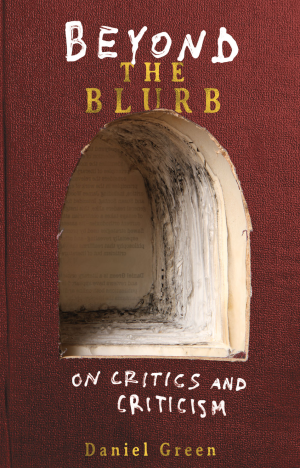
  • It seems accurate to call Jen Fawkes, at least on the examples offered by her first two books, Mannequin and Wife and Tales the Devil Told Me (the former published in 2020, the latter in 2021) a fabulist, in a line of fabulist writers that has been joined by more and more writers over the past 20 years or so. Perhaps the emergence (or reemergence) of the fanciful and dreamlike in American fiction–to call this sort of fiction "surreal" would tie it too closely to the 20th century literary movement that made the term popular, with which it really shares only a preference for the distortion of reality–can be understood as a reaction to the rise of minimalist neorealism as the prevailing practice in the 1970s and 80s. But while among those adopting fabulation as an approach could be counted a writer such as George Saunders, the practice seems to have been especially appealing to a burgeoning number of women writers, who have found it more compelling than realism as a way of representing women's experiences, especially as way of challenging social, cultural, and psychological stereotypes.

    Although the current writers we immediately identify with such a tendency might include, say, Aimee Bender and Karen Russell, arguably the real precursors to this mode of contemporary fiction are, arguably, Angela Carter and Rikki Ducornet. Their work directly invokes fables and fairy tales, evoking female sexual desire in a way that seems in tune with the liberatory cultural energies of the times (1960s/70s) but also, given expectations of women writers before them, still seems truly transgressive. Their fiction has a complexity and allusiveness that transforms the elemental simplicity of the fabular into a poetically suggestive kind of tale that retains the allegorical ambience of the fable but conveys meaning indirectly through the beguiling potency of the imagery. Subsequent writers showing the influence of the approach taken by Carter and Ducornet have affirmed the pursuit of an "alternate reality" as a valuable strategy in evoking facets of women's lives largely glossed over in American fiction, but the depth of vision to be found in the earlier writers is more difficult to emulate.

    Jen Fawkes seems more inclined to the complexity of perspective found in Carter and Ducornet, even if at first glance the stories in a book like Tales the Devil Told Me might be characterized as simple reversals of the viewpoint associated with traditional fairy tales (substitute as protagonist the evil character for the good one). The first book, Mannequin and Wife, does not so explicitly cross over into the fabular world of make-believe but instead injects elements of the fabulous and the uncanny into what might otherwise be ordinary situations, as in "Sometimes, They Kill Each Other," the first story in the book (told in the plural first-person by the secretarial pool), in which the executives in a corporate office express their competitive impulses by literally engaging in duels staged in the office for the spectatorial pleasure of everyone assembled. In "Iphigenia in Baltimore," the "strength" of the title's mythical character is again literally figured in the story's protagonist, a fourth-grade teacher described as the "strongest woman alive" who must refrain from romance out of her fear she may unwittingly injure her partner, as once she had done in the throes of passion, wrapping her legs around her would-be lover and crushing his pelvis. 

    Other stories in Mannequin and Wife are less fanciful, although still disposed to the odd and eccentric. In "Rebirth of the Big Top," the owner of a drive-in theater begins to hire the former employees of a defunct Sideshow Carnival ("Miranda the Elephant Girl," "Julius the Lobster Man"), whose presence begins to revivify his business. The protagonist of "Call Me Dixon" (ultimately an  unreliable narrator, to say the least) assumes the identity of a code-breaker (whom the narrator tells us he found dead by suicide) during the London blitz of World War II, but discovers that he is not the only one who might be suspected of operating under a counterfeit identity. In general the stories in this book effectively contest the boundary between the real and the fabulous, but ultimately they are somewhat various in tone and structure, ranging from paragraph-long flash pieces to longer stories (such as "Call Me Dixon") that have the looser discursive structure (if not the length) of a novel rather than a more strictly controlled linear narrative.

    The stories in Tales the Devil Told Me also vary in length (the longest story in the book, "The Tragedie of Claudius, Prince of Denmark," Fawkes's retelling of Hamlet from Claudius's perspective, is almost novella-length), but the stories are thematically and structurally unified by the book's underlying conceit: the stories are essentially "twice-told tales" by which well-known fables, fairy tales, and other famous narratives are retold from the point of view of the stories' ostensible antagonists or narrative foils. The recompositions include the stories of Rumpelstiltskin (of a race of creatures called "rumpelstilts), Peter Pan, and Hansel and Gretel, as well as more modern works such as Moby-Dick, The Jungle Book, and Daphne du Maurier's Rebecca. Some of the narratives retain their original settings, while others are updated to a more contemporary scene ("Never, Never" is a sequel of sorts to Captain Hook's sea adventures, after he marries and settles down in an American suburb). Almost all of them intelligently and provocatively explore the potentially more complex and ambiguous imagined realities of characters who in their original incarnations played the narrower and more reduced role of villain.

    Especially effective in realizing this ambition are "The Tragedie of Claudius" and "A Moment of the Lips," the latter the story of Polyphemus the cyclops and his encounter with Odysseus and his crew on their voyage back to Ithaca. It could be said that "Claudius" humanizes Claudius just by showing that, perhaps, there is another side to the story of Hamlet père's  betrayal, necessarily inaccessible to the son, but the effort doesn't really critique Shakespeare's lack of interest in this other story; rather, it illuminates the way in which Shakespeare had to ignore this part of the story so that his play could focus on the psychological deterioration of the title character–and thus fulfill the requirements of tragedy. As with many of the other pieces in the book, by providing us with an alternative version of an established story, Fawkes highlights the artifice of story, perhaps prompting reflection on the contingencies in narrative, the varied purposes that determine both what is built into a story and what is left out. "A Moment of the Lips" makes us especially aware of the stark differences between the requisites of epic narrative and those of modern psychologically-directed fiction. Polyphemus doesn't mean to eat Odysseus's men: he just can't seem to escape his cyclops nature. His actions appall, but his sincerity appeals.

    Fawkes reports that she will be following up these two collections of short fiction with a novel that sounds like it will continue in the fabulist mode but also be formally adventurous in a somewhat more conspicuous way (Tales the Devil Told Me in particular relies necessarily on essentially traditional narrative conventions). This surely is something worth anticipating, after this very engaging pair of first books.

Essays in Criticism

Unbeaten Path
Unbeaten Paths: Reviews of Adventurous Fiction