A book with pages fanned out sitting on a dark wooden table, set against a white background.

The Reading Experience

Daniel Green’s Blog and Website

  • Many readers of Christina Tudor-Sideri's Schism Blue would likely find it initially to be somewhat static and abstract, perhaps even obscure. The two figures who will be the novel's characters–the only characters–are rather indistinct at first, and where such qualities as their appearance or their manner of speaking are concerned, they remain indistinct throughout. There is no story of any conventional kind, except for what could loosely be called the story of the main character recollecting (and recreating) her now dead lover, Few concrete events aside from this recollection are related in present narrative time (it could  be said that part of the main character's motivation is to, in effect, annul narrative time altogether), although eventually we are presented with brief episodes of more concrete activity occurring in the past. The novel seems to be set nowhere in particular, but wherever it is it is cold, and it seems to snow quite a lot.

    These formal features are reinforced in the novel's style, which is highly metaphorical but doesn't provide a lot of close figurative description, the language more philosophical and rhetorical than lyrical:

        Between them, the night, its shadows, ambivalent as to whom to protect, him or her; the night that cannot tear itself asunder, the night that cannot offer itself to both of them; the night, its shadows in disarray, from her steps to his hesitations and back again, from the idea, no from the essence of a god, the god of this painting in reverse, this painting that shows her leaving when it was, in fact, that reality took the shape of his departure; from this essence of a god to the rest of the world, in throes, to the world immersed in petty passions and ebbing desires and folding of the senses.

    This language is employed to disclose the efforts of the main character, who is a writer, to not merely remember her lover, who was a painter, but to in effect keep him alive in her continuing acts of imagination. It might be said that the novel as whole comprises this character's attempt to meld past and present through a kind of perpetual visionary projection.

    Thus, while Schism Blue never does develop the drama or narrative movement of the kind readers might expect, it does acquire its own sort of fascination as a contemplative metafiction that ruminates on the process of fiction-making–or on the process of fiction-making as it unfolds within the consciousness of its main character. This character is not relating her experience in her own voice, so it as if the larger narrative voice observes these cerebral acts of creation, although it is more like this voice reports on the character's awareness as she creates, while the actual creation–the fictional character that is the lover, and the specifics of his actions (his "story")–remains unavailable to us, tucked inside the writer's desk. The "narrative" offered by the novel, is indeed the story of the storytelling, without access to the story told.

    Because of this odd narrative structure (a narrative that is a supplement to another narrative that is hidden), the pleasures to be found in Blue Schism are realized in individual passages of writing rather than the architectural whole to which they nominally belong. In an extended reverie in which she summons the lover by thinking about the image of a red house (presumably an image in one of his paintings), the main character reflects: 

         A beautiful echoing, this memory now for assembling all that she has gone to assemble; a house amidst spruces; a house he made for her; a house on the beach; a house, emergent, on the highest of crests, in the deepest of caves, a house from the hands of a painter, from the mind of a writer, from a beautiful creator of tiny red houses.

         She is able to apprehend the nature of this red house. And that is happiness. That too is paradise. She is able to situate this house inside the human space of the mind. She is able to create correlation and contain absence and presence and coming-into-being inside of its redness. She is able to carry this house.

    The novel is best at offering this sort of insight into the aesthetic transformation of experience, expressed metaphorically and rhapsodically, ultimately making such transformation what the novel is actually "about," acting as both the object of its discourse and the engine of that discourse. Schism Blue pushes against the tyranny of the conventions of plot, character, and setting as strongly as any novel I've read, even though I wouldn't really call it a work of experimental fiction. It is more like a prose poem than a formal or stylistic experiment.

    Still, I wouldn't call Schism Blue "poetic" as that term is usually applied in reference to works of fiction. Its metaphorical language is used not as lyrical embellishment but as a formal pattern that  brings a unity to the novel that usually comes from plot. The novel does depict characters, even if they are less explicitly delineated than in most novels. And if the setting is also mostly nonspecific, it actually figures into the living memory the protagonist is attempting to create by serving as evocative imagery. This novel definitely blurs strict boundaries between fiction and poetry, but it works most provocatively as an unorthodox work of fiction.

    No doubt some readers would find it too unorthodox, too dependent on its elaborate prose, providing too few of the usual signposts by which we navigate most works of fiction. For those who absolutely require those signposts in order not to lose their way, perhaps Schism Blue would prove too perilous. For those willing to get lost once in a while but trusting that the work itself will ultimately guide them back, the effort is fully worth the risk.

  • That we live in a ubiquitously connected electronic world is by now such a firm fact of 21st century life that it hardly seems worth noting, no matter how much we worry it may be altering the nature of human experience in ominous ways. Diminished attention spans and a narrowed conception of social relations may indeed be among the consequences of the ascendancy of the internet, but there is currently not  much reason to believe its reach will soon be curtailed by our concerns about these matters. The story of how the world we inhabit increasingly became a cyberspace is certainly incomplete, although that space is likely to become more all-encompassing, as the serviceability of online technology continues to be extended and refined.

    A recent book focusing on the story so far, Extremely Online (Taylor Lorenz), contends that the internet has taken its present form not so much through the efforts of those developing the technology but the collective efforts of users who through their resourceful adaptations of the possibilities offered by the internet enhanced its character and shaped its ethos. Although the book emphasizes the evolving economic dominance of the internet and the cultural impact of "influencers," it maintains that "the web" served as a means of expression not previously so widely available and empowered enterprising individuals to create novel forms of communication and association. 

    If the influencer addressing popular subjects of widespread interest could ultimately accumulate a very large audience, smaller communities of interest might also begin to appear through this new mode of connection. Thus arose what came to be called the "blogosphere," that domain of cyberspace occupied by versions of the weblog, the form of online communication that became the first manifestation of the web's capacity to produce new channels of discourse that bypassed the officially sanctioned practices to be found in print publications. One of the variants of the blog was the literary weblog, or "litblog," which, as the name suggests, was concerned with books and literary culture, although eventually some litblogs focused even more particularly on various eras of literary history or on specific literary forms.

    Litblogs still exist, but many of the blogs that initially brought attention to the phenomenon of litblogging do not, or have been modified into more general literary websites. At first, litblogs were pretty closely tied to the established print media that devoted space to books coverage and other literary news. Blog posts were usually quite brief, often mostly links to print sources, and were largely intended to provide wider access to developments in the literary world. As more readers became aware of the early blogs, and the number of blogs began to proliferate (often launched by these very readers), the comments section of litblogs became more active as well, as the common practice of offering a "blogroll" identifying other blogs and bloggers engaged in what increasingly seemed a common project, served to create an informal community of readers, whose interest in books, and literature more generally, were evidently not being adequately satisfied by the mainstream literary press. 

    Soon enough, then, just linking to reviews or noting daily literary developments started to seem a limited use of the weblog's potential, and litblogs began to feature more substantial commentary, still mostly informal in tone and relatively modest in length, but attempting to augment the consideration of literary matters rather than simply relating it through links. This happened as more people joined the litblogosphere, from a variety of backgrounds but seeming to share a belief that the blog as a medium presented an opportunity for both a broader and deeper engagement with books and writing than the existing hierarchy of the "mainstream media" could accommodate. Among the new bloggers were academic literary critics testing out the form, some as a forum for amplifying their academic work, but others writing about literature more directly, either as a supplement to academic writing or in some cases an alternative to academic criticism in its then current version.

    I myself belonged to this group of converts to the litblog (although I decided to adopt the form relatively early, when only a few of those who would become the most recognized of the early litbloggers had already established their blogs, bloggers such as Maud Newton, Laila Lalami, and Mark Sarvas). My goal in starting The Reading Experience from the beginning was to see if serious literary criticism could be carried out on a blog. As I tried to suggest through the name I chose for the blog, I was attempting neither to use the site as a way of providing a broader context for my work as an academic critic, nor to turn it into an outlet for an academic criticism modified to a new medium. Instead I imagined the weblog and its growing audience as a potential opportunity to bridge differences between the kind of academic criticism I had learned to practice and a more general-interest criticism that attempted to reach a larger, less insular audience but emphasized the analytical as much as the evaluative.

    I would not say that my motivation was strictly shared by other bloggers who helped expand the scope of the litblog. My posts on The Reading Experience were likely the product of my own idiosyncratic notion of what a "literary" blog could be, although I did receive enough encouragement from readers and other bloggers about my approach–encouragement that indeed may have been prompted by a perception that what I was doing was something different–that I felt sufficiently motivated to do almost all of my writing on the blog (no more academic articles or lengthy literary essays pitched to whatever publication might seem a promising target). At first I didn't really write many straight-out reviews, as the goal was not to reproduce mainstream book review discourse but to develop a less formalized kind of commentary that still offered more than facile judgments of either praise or disapproval.

    Many of the posts I wrote in the early days of the blog were in fact not close readings of individual works at all. They were instead direct reflections on the practice or criticism that, at least in retrospect, were more like lectures than book chat. Indeed, I now cringe somewhat at the rather high-handed manner of some of these posts whenever I re-read them, although perhaps the tone seems high-handed because it is no longer so unusual to find an elevated level of discourse on blogs and websites devoted to literature and literary discussion. Such discourse can take for granted that its audience shares assumptions and expectations, but since I really didn't know what knowledge or interest my readers actually brought to the perusal of my blog, I chose to address them as just the sort who would be receptive to the kind of analysis and appraisal I hoped my blog could provide–curious and intelligent, but otherwise more accustomed to the existing norms of mainstream literary journalism.

    I can't exactly say that I had in mind from the beginning to overthrow these "norms" of mainstream critical writing, but gradually this did indeed more or less become an implicit–in some cases explicit–ambition as The Reading Experience became more established. (Given the low traffic this blog presently attracts, I am always rather astonished to look back at the user numbers from its early years–although my blog was not among the very most popular litblogs, from my current perspective those numbers nevertheless seem huge.) And in this I believe I can say I was joined by a significant number of other litbloggers for whom "mainstream" increasingly became a term of abuse. Certainly through distinguishing ourselves from mainstream print publications we were engaged in a fair amount of self-promotion, setting ourselves up as "alternative" sources of information and judgment (even though more often than not the information came from the print sources we otherwise disdained). Yet I do think that as a whole this early group of litbloggers (a snapshot of my blog's blogroll from the time can be found here) did share an enthusiasm for literary works, new and old, that were outside mainstream reading habits and that did not merely reinforce the dominance of the biggest publishers.

    This broader orientation was ultimately reflected in the creation of a cross-blog alliance we called (somewhat clumsily) the "Litblog Co-op" (link). This group in its mission statement explicitly declared itself to be "uniting the leading literary blogs for the purpose of drawing attention to the best of contemporary fiction, authors, and presses that are struggling to be noticed in a flooded marketplace." Ultimately the co-op's activities were largely restricted to making a quarterly selection of one new book to be highlighted through a prize-like announcement on the group's collective website and accompanied by individual posts related to the selection, written by various members. (These weren't always laudatory. I myself registered a couple of dissenting views regarding the selected books.) The endeavor was short-lived: the first "Read This!" selection was made in 2005, and by 2007 the group disbanded. 

    In retrospect, this project was clearly enough an attempt by the "leading" litbloggers both to reinforce their status as a vanguard of sorts in the rise to prominence of the literary weblog and to certify the litblog as the successor to print-dominated literary journalism. The first ambition was perhaps temporarily fulfilled, but even during the two brief years of the group's existence, new literary blogs continued to emerge, and while to an extent the LBC (as we referred to it) tried to accommodate this reality by periodically adding new members, that this endeavor finally could only reinscribe the hierarchical order against which the literary blogosphere was supposedly standing seems perfectly obvious now, and this would have become a debilitating contradiction even if the Litblog Co-op had continued a while longer. The second aspiration likewise could be dismissed as mostly presumption and hubris, except that the underlying supposition was in fact ultimately confirmed: the litblog itself did not become the successor to print journalism as the primary source of literary discussion, but the blog did prove to be the herald of a large-scale migration of serious literary discourse from existing print publications to various kinds of literary-focused sites online.

    Intellectual discussion of numerous other subjects also appeared with more regularity both on blogs and in other web-based forms, but the resistance to the idea that substantive literary journalism and criticism (aside from informal "book chat") might be carried out on the internet was particularly strong and persisted longer–except when such resistance just disappeared. Many if not most of the literary blogs associated with the LBC began posting less often and eventually stopped altogether. I myself put The Reading Experience on an extended hiatus, and when I decided to bring it back, the audience for a blog such as mine had clearly diminished. But in the meantime other websites centered on literature and literary criticism had appeared and were replicating the kind of close monitoring of developments in the book world that litblogs had supplied. They were also more like conventional publications with a "staff" of writers and editors rather than the personal journals of the proverbial bloggers in their pajamas. And not only were the legacy print publications no longer condescending to online literary conversations but soon enough were themselves joining in with their own blog-like venues, such as the New Yorker's "Page-Turner."

    New web publications offering thoughtful longer-form literary criticism–mostly in the form of book reviews but not necessarily confined to reviews–also began to appear with some frequency, and when I began to less frequently update The Reading Experience, I turned to these publications to pursue my own continuing interest in cultivating a kind of criticism that had intellectual credibility without simply mirroring the periodical book review or the academic essay. Luckily there were a number of web-based publications that allowed me to do this, such periodicals as The Quarterly Conversation, Open Letters Monthly, 3:A.M. Magazine, and Full Stop. Writing for these outlets was, on the one hand, fully comparable to writing for traditional print publications–being assigned a review or making a pitch for one, working with an editor–but on the other felt more like enhanced blogging. The books included for review were much more varied than in mainstream book review sections, including more books in translation and from smaller presses, and the editors demonstrated a greater interest in unconventional, adventurous works. Reviews were less formulaic, with a greater tolerance for longer and more digressive analysis, while some reviewers made their reviews less formal and more personal as compared to typical newspaper and magazine reviews. Still, these web publications maintained a relationship to the reading audience that was closer to the one-way communication enforced by traditional print newspapers and periodicals. They brought in a wider  range of contributors, but there were few of the interchanges between wrier and reader that on occasion enhanced the discourse on literary blogs. 

    Like literary blogs themselves, these initial online book reviews went through a process of waxing and waning. Some of them are now discontinued or curtailed in their scope. What seems like a fresh opportunity to develop more a capacious kind of literary criticism generates some enthusiasm, but that enthusiasm can't compete with the greater resources devoted to subsequent sites that appropriate the approach taken by those who established the practice, while redirecting the coverage and focus of interest to a broader consideration of literary culture (and culture in general) and ultimately a more mainstream audience. And gradually the new literary websites come to seem in their organization and outlook more like the sort of conventional literary organs we bloggers wanted to challenge.

    While some of us had entertained fantasies of some such consortium of litblogs as the LBC replacing conventional literary organs, the kind of web publication that evolved during the 2010s actually did replace them. There is no doubt that the New York Times Book Review and the Times Literary Supplement continue to be the most prestigious and influential standalone book reviews, but they are indeed standing pretty much alone among newspaper book reviews. The book review sections of most newspapers have either been eliminated or severely cut back, and the New York Review of Books is about the only remaining independent print publication in the United States exclusively offering book reviews. Magazines such as The Nation and The New Republic still offer book reviews, but I daresay most readers access these publications online and experience them as essentially another online site. The extent to which this erosion is due to the increased availability of online book review websites is debatable, but there is no doubt that competition from the internet has contributed to it. Coverage of books, and the arts more generally, seems to has substantially been left to web-based publications.

    Certainly it is not the case that literary commentary has migrated to the web simply because it has been abandoned by financially straitened print publications. The quality of the commentary is indeed high in such places as the Los Angeles Review of Books, The Point, and Public Books, arguably as high or higher than it ever was in all but the most distinguished print magazines. In these publications it can perhaps be said that the potential for the online medium not merely to reproduce the literary discourse of traditional print criticism but to augment or supersede it is realized. But in the process, they have also recreated the rhetorical situation in which pre-web criticism was produced, with status and authority invested in the editorial distinction presumed by the publication itself, which in turn confers it on the critics and reviewers featured. Even when the subjects covered in these journals are associated with mass entertainment rather than works of high seriousness, a kind of highbrow importance is still attached to the analysis provided, with little or no audience participation encouraged.

    Arguably there is a need for criticism and commentary that offers an authoritative perspective, supported by the critic's manifest knowledge and critical acumen. Any perceived distance between critic and readers or even critic and other critics is less important than the model of serious reading provided by the most committed critics. The sorts of critical sites I have mentioned are more likely to feature critics whose primary calling is as a critic rather than a fiction writer, and the underlying motivation for much of what is published in them more often seems to be first of all as an exercise in critical understanding, not the provision of consumer information, as continues to be the case with the majority of newspaper book reviews. Neither do they focus so relentlessly on just the currently "newsworthy" releases, and what coverage there is of foreign titles in American book review spaces is largely found in online publications. In all of these ways, a good deal of the literary criticism published online redeems the proposition inherent to the early litblogosphere  that the internet could serve as a medium for substantive engagement with literature.

    Yet even if consequential literary criticism can now abundantly enough be found online, the evolution of online literary discourse from the blog to highbrow online journals has taken us from the possibility that a critical space might be created for a different kind of criticism, neither "general" (although accessible) nor "academic (although serious-minded), to a reoccupation of such space by critical writing that is intellectually credible but almost as insular and remote as the mainstream establishment practices against which the literary blogosphere reacted in the first place. In their commission of reviews and choice of critics, they are just as likely to to apply the criteria conventionally used to produce "interesting" pieces–interesting in subject or theme but not necessarily focused on pure literary interest–and to "match" the book under review to reviewer with the right credentials or a currently high profile. While book reviews and literary commentary certainly pay very little, attitudes have shifted back to the assumption that "real" reviews are those that are paid, with the accompanying inference that such reviews are credible because they are published through a reputable editorial process. In short, the literary weblog may have prepared the way for a critical writing about literature online that not just rivalled but eventually exceeded both in quantity and depth what had been available in general-interest print publications, but in the end it has reconstructed the apparatus that makes literary commentary an elite practice.

    This was perhaps inevitable. Just as the internet itself was consolidated into the American media system (and into the capitalist system as a whole), the literary version of this system seized on the developing online modes of communication and was able to dominate them. Resistance to this takeover was not very strenuous, as writers, as they always will, sought readers, as well as recognition from perceived authorities, and critics sought to be recognized as such authorities. Looking back at it, it seems pretty clear that my early blogging colleagues not so secretly hoped that the increasing attention paid to them as bloggers would ultimately lead them to opportunities in the establishment media we were supposedly challenging (and I don't exempt myself from having such thoughts). A significant number of them succeeded in their ambitions, and some of them now occupy prominent places in that since-transformed establishment. I am perfectly happy with their success, but I am undecided whether finally I consider ti a sign of the larger triumph of literary blogging or a token of its surrender.

    Although perhaps the real surrender of blogging occurred with the rise of social media, but most especially Twitter. It is almost certainly true that Twitter appropriated from the early blogs the short digest form of post–usually brief notices of literary news, often joined to some  pointed commentary, or sometimes just a brief outburst of opinion. This sort of proto-microblogging was, in fact, popularly associated with blogging at first, serving a function similar to Twitter but without the centralized address. The one-stop convenience of Twitter eventually rendered digest posts superfluous, and when Twitter and other social media sites began developing their own books-based communities, there was no longer a reason to visit litblogs that primarily featured these Twitter-like posts. Many of those blogs simply ceased activity, and the literary blog itself more or less faded from prominence as a phenomenon of literary culture.

    Individual blogs by writers focused on literature of course persist, but few of them maintain any kind of steadily high traffic, although this is not really the ambition behind most of them. Unlike the early blogs, they don't really seek to challenge existing literary discourse but to provide an alternative for readers not keenly attuned to it. Some are more narrowly specialized–Neglected Books, The Untranslated–while others allow their authors to register their ongoing responses to the books they read (fulfilling one of the paradigmatic functions of litblogging). Those seeking a larger audience have instead turned to Substack, which (along with other, similar newsletter services) takes the writer's efforts directly to the reader via email rather than waiting for readers to arrive–a blog on wheels, perhaps. To some extent the popularity of Substack as a way of  distributing blog-like writing suggests that the impulse originally satisfied through the development of the weblog still motivates writers and would-be writers to take advantage of internet technology to circumvent traditional modes of publication. On the other hand, both phenomena might just be evidence of the way in which the technology creates the need for its use. Surely the growth of Substack has encouraged the proliferation of newsletters covering less-than-urgent topics, and it is likely we will reach a point of diminishing returns for the paid newsletter, as readers reach their limit in spending on subscriptions.

    At the least, however, the technology did make available an opportunity to create an "in-between" kind of literary discourse (in between a purely personal reading journal and officially sanctioned literary criticism) open to the unmediated discussion of books and writing, separate from the constraints imposed by established literary journalism as well as academic criticism. (And when literary journalists and academic critics did come to participate in the blogosphere, it was usually according to the protocols attached to blogging, not the other way around, as at, for example, an "academic" blog called The Valve, to which I was a contributor for several years.) But as audiences grew and the lure of profit beckoned (although we now know that this prospect has turned out to be an illusion), the technology changed ("improved"), and the conditions on the ground, so to speak, also inevitably changed, The blog would turn out to be only the initial step in transferring American literary culture online; the simple tools of blogging alone would prove inadequate to such an epochal task.

    If literary blogging helped lead us to the much-expanded online network that now serves as the locus of establishment literary activity, this process has unfortunately left no place for blogging. Even with the current unsettled circumstances in both internet publishing and social media (publishers keep going out of business, social media keeps fragmenting), I do not expect that litblogging as we knew it at the beginning will make any kind of significant comeback. Which is not to say that blogging will not survive, just that it won't again have the same king of salience to the direction literary culture takes as it briefly did in the nascent days of the blogosphere. Bloggers will have to be satisfied with a medium that offers limited reach but allows them maximum freedom and infinite space to say what they have to say at whatever length, and perhaps find an audience who wants to hear it. This may be the most invaluable promise the blog made to writers in the first place.

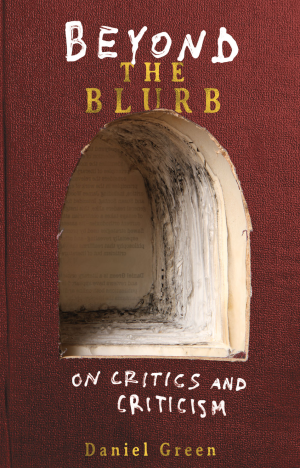
  • The Mandate of Reviewers

    The title of Phillipa K. Chong's 2020 book, Inside the Critics' Circle, juxtaposed with its subtitle, "Book Reviewing in Uncertain Times," immediately announces its foremost limitation as an account of the state of literary criticism in these "uncertain times." Casually assuming the conflation of "criticism" and "reviewing" (an assumption no doubt shared by most potential readers of a book like this), the title raises the stakes in our consideration of the scope of Chong's study: will we indeed gain some sort of clarity about the practice of criticism at this stage of history, literary and otherwise? If Chong had simply used the subtitle as her title (which is actually more accurate to her book's real focus), it is likely we would regard it as much more limited in its reach.

    In fairness, however, Chong herself goes on to make the kind of distinction between criticism and reviewing I am suggesting should be made, although she still designates the different approaches to literary discussion as forms of criticism–journalistic criticism, essayistic criticism, and academic criticism–even if her description of the first clearly enough distinguishes it from the other, more exploratory, forms: "Journalistic critics traditionally write reviews for daily or weekly publications (i.e., newspapers) and have the widest mandate of the three forms of criticism: to review newly published fiction." Indeed, Chong seems to narrow the mandate of reviewers (to write for newspapers), more stringently than even I would have it, since reviews by any conventional delineation of the form could and do appear in weekly and monthly periodicals (the forum for essayistic criticism according to Chong), as well as web journals and magazines. Even more narrow, of course is the restriction to coverage of "newly published fiction," which oddly both makes the focus exclusively literary (where reviewing must be more purely a critical act) and makes the consideration of fiction by critics more like reviewing any new "product."

    By the time we have gotten to the first chapter that takes us "inside the critics' circle," it is manifestly apparent that the circle is a tightly encompassed one and that to the extent Chong's sociological study of the processes of literary judgment will inform or enlighten us, it will be through a very narrow focus on the contingencies of current book reviewing (fiction only) in the United States. Moreover, the study arises from interviews only with reviewers who "had published a review in at least one of three influential review outlets," producing what she admits is an "elite bias." This makes Chong's book, on the one hand, practically useless for comprehending the broad range of reviewing practices readers might encounter in the various forms of literary discussion now available, but, on the other, very helpful, even essential, in understanding why American book reviewing at the "elite" level is in its presently dismal condition (which actually it has been in for quite a long time).

    In Chong's telling, the inherent confusion that besets reviewing in prestige venues proceeds from various kinds of "uncertainty" that attends the practice. (Chong presents these uncertainties as more or less unavoidable according to established book reviewing protocols, but those protocols themselves are incoherent bordering on irrational). The first kind of uncertainty is "epistemic," which begins in the unavoidable subjectivity of judgment but extends further to the choice of books to be reviewed in the first place and the selection of "appropriate" reviewers. The subjectivity of literary judgment is indeed an intrinsic feature of all literary criticism, but both Chong and the literary establishment she surveys proceed as if it is something to deplore and avoid. It is not. Literary criticism can exist, in fact, only as the explicit exchange of subjective perspectives. If it were actually possible to arrive at objective assessment, this would presumably be a "correct" conclusion  to which all readers would willingly consent. Criticism would come to an end.

    Certainly the editors Chong interviews do not seem overly concerned about "objectivity"–and certainly very little about literature–in deciding what books should be reviewed and who should review them. Although Chong's survey doesn't really reveal any new information about the procedures involved in carrying out these tasks, her account makes plain the extent to which American editors and reviewers adhere to a set of imperatives that, to say the least, are not much concerned  with ensuring that literary merit is either identified or evaluated. The books chosen are those that are "newsworthy" or that are "interesting" to the editor or reviewer involved (subjectivity doesn't seem to matter here), although not necessarily interesting for artistic reasons (interesting "ideas" will do). And of course the "big books" have to be reviewed, books by famous writers or that are already creating a "buzz." Her discussion of editorial decision-making certainly justifies Chong's declaration that "Readers may be surprised that 'quality' is not chief among the criteria guiding the culling process." 

    Neither is choice of reviewer a question of securing the most critically cogent review. Here again the criterion is "interest," not quality. Editors often attempt to create an artificial kind of interest by seeking out a "good match" between book and reviewer, a match that sometimes means a critic who might bring special insight into the work under review but that at other times iis based on perceived connections (often superficial) between book and reviewers, suggested by the book's content and the reviewer's professional or personal identity. Achieving a "good match" might thus produce newsworthy commentary of a very muffled sort, but it is external to the literary value of the work considered. Still, many book review editors consider the search for the good match to be the most essential part of their job.

    Many people would say, of course, that in following these procedures in the production of book review pages, both editors and most of the reviewers they select are simply carrying out the tasks assigned to the literary journalist. And if most editors and reviewers perceive themselves to be primarily literary journalists, then there is some truth in this claim, to the extent that literary journalism is mostly an effort to report on current events. But many reviewers, at least, would like to believe that both the books they review and the reviews they write have a value beyond their transitory status as cultural news item, that both might still be read by future readers for whom the urgency of the original cultural context surely will have faded. Arguably what readers would want from critical writing in such a situation is that it illuminate the work as a literary creation not dependent on the immediate circumstances attending its reception. While certainly some reviews provide solid literary analysis transcending the contingencies of their commission, the "system" by which mainstream American book reviewing operates hardly seems one that seeks out literary merit for its own sake or that values literary criticism as a self-sufficient practice.

    The choices made by reviewers themselves turn out to be almost as antithetical to the integrity of criticism as the systemic biases that govern editorial decisions–perhaps more so. In what is the most discouraging chapter in her book, Chong discusses the "social uncertainties" that putatively beset reviewers in trying to conscientiously carry out the book reviewer's responsibilities. "Social" in this case means almost entirely the social situation occupied by most book reviewers, in which they must defensively guard against reprisal for negative reviews (in the form of a negative review in return), risk embarrassment at social gatherings, and avoid cultivating a reputation for dispensing harsh assessments, especially when "punching down" at younger or less successful writers. Reviewers admit to Chong that they try to avoid assignments that might provoke these social tensions and professional hazards, and some make it plain enough that they hold back on strong expressions of judgment, "play nice," in  Chong's formulation. Finally the impression Chong's survey of the practices of American book reviewers leaves is one of equivocation and evasion, when not outright dishonesty.

    At times Chong herself seems on the verge of invoking such language in response to what her reviewers tell her, but instead chooses to maintain a discreet scholarly distance. In her chapter on the "institutional uncertainties" of book reviewers, she is more critical of book reviewing as a collective enterprise, noting that the reviewers she interviewed in fact had little sense of themselves as part of such an enterprise, to the point that many of them doubted that they should be called "critics." At the same time, they are quite insistent that they should be distinguished from bloggers and other "amateurs," although very little in their own self-conceptions as reviewers provides for such a separation. Writing for one of the "elite publications" acts a form of official approval, an "objectified signal of one's belonging to the wider literary community"–although not a community of critics. A critic in the more rarefied sense is occupied not so much with the valuation of a text but the exercise of critical intellect more generally, which most of the critics quoted in the book insist remain outside their purview, These reviewers ultimately can't really decide if they are simply the designated intermediaries between writers and readers, here to provide a thoughtful recommendation, or credible critical voices ready to wield an authority conveyed through deeper reading.

    In my view, Chong is too hasty in making such a clear-cut distinction between the newspaper reviewing she considers in her book and the "essayistic criticism" to be found in some weekly and monthly magazines or some web journals, where she believes something closer to intellectual seriousness can be found. But while such publications (what remains of them) do publish longer and less insistently evaluative reviews and essays, many such pieces still exhibit the same features revealed in Chong's study: a focus on "subject" beyond all other considerations, a reluctance to criticize too harshly (whether through fear of retribution or a sincere desire to be considerate), and an ultimate commitment to maintaining a literary community over advocating for literary values more generally. Of course there are critics who reinforce these values at a very high level, including in newspapers (Sam Sacks comes to mind) as well as in various other publications that feature "essayistic" reviews (both The Baffler and The Point have recently become valuable sources of such criticism). But unfortunately Phillipa Chong's report on the assumptions shared by her more narrowly chosen representatives just doesn't seem that far removed from the similar assumptions widely shared by of many of those who belong to what can be designated as today's "critical establishment."

    This establishment is the logical outcome of what is now decades in which general-interest literary critics have been replaced by other writers of fiction as the go-to authors of book reviews, while fewer and fewer academic critics have been willing (or able) to cross over into general-interest criticism. At the same time, the critical tenor deemed acceptable in book reviews of fiction has followed the culture in becoming literally less judgmental–when fiction is regarded primarily as a form of "expression," who's to say when someone else's expression is flawed? But judgment is not simply (or not only) an act of moral or aesthetic evaluation but is also the process of perception and analysis that precedes any such evaluation. In the current critical order, book reviewers are reluctant to invoke judgment in this latter sense, while academic critics are reluctant to engage in mere evaluation (and these days don't exercise judgment about mere literature, which is only the conduit for the analysis of culture). A kind of criticism bridging the gap between the literary focus of popular book reviewing and the analytical scrutiny of academic criticism would be beneficial to literary culture, but it is presently without a proper place in the existing literary domain.

  • Rohan Maitzen has posted on her blog an extended discussion of her experience reading Martin Amis's Money with her book club. Rohan says she disliked the novel because of its morally odious narrator, but also describes the character as "memorable," with a "distinctive and unforgettable voice." She as well admits the novel is "sometimes LOL funny" and that Amis's style is at times "virtuosic."
     
    Pretty clearly Rohan (and her book club colleagues) could not get past the intrinsic assumption that a fictional character is to be regarded as a person, to whom we respond in the same way as we would an actual person–we wouldn't want to know the protagonist of Money in real life, so why should we put up with him in this novel? This is an assumption I have never shared, and in this case it has led Rohan as a reader to overlook what she has herself identified as the novel's aesthetic virtues. Rohan's reaction to Amis's novel suggests to me that we have fundamentally different expectations of what a work of fiction is for.
     
    For me, a work of fiction is a verbal fabrication that has as its goal the creation of artistic effects precisely like a "distinctive voice" or an act of sustained comedy. Rohan concedes that Amis wants us to dislike his narrator, so this, too, might be considered an artistic achievement in Money. If we do dislike this character, Amis has succeeded in setting up a reading experience in which we will have to wrestle with the moral complexity of reading about him, anyway.
     
    I will go out on a limb here and say that works of fiction, far from being "empathy machines" by which we come to be closer to "other people," should be a space in which we discard our ordinary concerns for actual people altogether. We might instead contemplate the way in which "character" is simply another device the writer may use to take us into a verbal world not just of moral complexity but one that doesn't operate by ordinary moral principles at all. This is a world where imagination and "virtuosity" with language are the supreme values, although of course the artistic vision expressed by the writer might raise all sorts of questions that might have all sorts of moral implications when we return to the world "outside the text."
     
    Rohan suggests there is an inherent difference between women readers of a writer like Amis and his more numerous male readers. But I think this again is really the difference between regarding characters in a work of fiction as persons and considering them the effects of language. I certainly don't believe only male readers such as myself (and I am no doubt in a minority of male readers in my own assumptions about reading) would want to think about literary works in this latter way. And unquestionably many male readers of Martin Amis are themselves responding to Amis's work for features beyond its implications for an aesthetic theory of fiction. (I should also say that, although I do like Money, I am not otherwise a particular enthusiast for Amis's fiction.)
     
    If we should respond to fictional characters as if they are real people, what is the point of creating fictional characters at all? Just tell me about some real people you admire and maybe I will admire them too.
  • You, Asshole

    There are no doubt fictional protagonists more reprehensible than the main character of Dave Fitzgerald's Troll (Humbert Humbert comes to mind), but most of these do not necessarily consider themselves morally blameworthy–they are often self-deceived or simply blind to their own shortcomings. The unnamed protagonist of Troll (not quite the narrator) knows very well that he is an impossible jerk; being an asshole is, in fact, at the very core of his identity, the condition to which he relentlessly aspires in order to give his life purpose. Although occasionally we get fleeting glimpses of the better person he might have been (but probably can no longer be), his role in the novel is to perpetually demonstrate his lack of concern for others or, if he does momentarily try to reassert some latent dignity, to inevitably revert to a fundamental boorishness he can't suppress, 

    This strategy of character development is a fairly radical move at a time when "likability" in characters has been elevated to an inviolable principle among readers (and too many writers) of fiction, even more so in a novel of more than 500 pages in which the protagonist is really the only important character. Fitzgerald should at least be given credit for chutzpah in this effort, but in fact the very audacity of his extended exposition of objectionable behavior is itself compelling and gives the novel its own kind of narrative drama ("will he ever wise up?). For those who value fiction that unsettles expectations of the form rather than reinforces the reader's self-contented comfort, a novel like Troll provokes us to reflect on the relationship between reader and character in fiction: can we hold the character in contempt and still enjoy the writer's way of creating the character? We would not likely want to interact with the protagonist of Troll in real life, but a novel is artifice, an illusion summoned through language, and to judge such a character by degrees of "likability" seems an unnecessarily restrictive perspective on the value of a work of fiction.

    Often a novel featuring a morally dubious or otherwise unsavory character confronts us directly with this character through the use of first-person narration. (Again Lolita comes to mind, or Celine's Journey to the End of the Night.) Simple proximity to the character through extended, intimate acquaintance with the narrative voice can deceive us into overlooking the character's more deplorable qualities or to seize on those better qualities we think we perceive beneath the surface of the character's literal actions. We are in effect tricked into feeling some affinity with the character, perhaps to later learn the depth of our gullibility. Fitzgerald denies himself the use of this trick in favor of what seems an even more brazen one: Troll directly implicates us in the actions of its protagonist by adopting second-person narration. This presumably would imply that we should restrain our impulse to despise the narrator because we too might share some of his human flaws. Except that such an interpretation can't really encompass passages such as this: 

    Your attention to hygiene is close to laughable. You bathe only when you've accumulated a noticeable filth, deodorize only when you can actually smell yourself, and brush your teeth only when they start to hurt (a task which reliably makes your ill-defined bicep sore before you reach your back molars). Your razor makes but cameo appearances, usually after your beard has already overgrown your neck and invaded the softer allopatrics of your chest hair. . . .

    This still seems to be the representation of a particular person, so particular that surely most readers would find it difficult to regard the character as a kind of Everyman figure close enough to themselves that they could be included as his shadowy surrogate simply through being addressed as "you." The better account of this novel's point of view would take it as a kind of internally split perspective: The protagonist addresses himself in the second person, perhaps to avoid fully claiming the behavior related, as would happen with a first-person narration–perhaps it is the protagonist-as narrator's only way of maintaining his moral scruples in the face of the evidence he presents of moral degradation. While some of the protagonist's errors–most conspicuously his immersion in the worst excesses of online culture (thus the most immediate derivation of the novel's title) and his slackerly wallowing in the mindless comforts of pop culture–are certainly shared widely enough by some in the protagonist's generational cohort, satire of our current cultural follies, although present, is not the novel's exclusive ambition. Its protagonist is finally not a cautionary figure only.

    Is the online troll purely a product of the ubiquity of online culture, a creature summoned through the simultaneous visibility and anonymity it allows? Were these creatures always already out there, waiting for this opportunity to show themselves? Or has the internet in its assorted varieties simply created them ex nihilo? In some ways the protagonist of Troll is a quintessential troll, trollish online and off-, but while his behavior finds its specific expression in the forms promulgated by the wired world, surely it is not simply the product of those forms. Online culture has given him the opportunity to postpone adult responsibility, to waste whatever writing talent he might possess on a clickbait factory called GRUNDL, where he composes the lists of top ten this and top then that of the sort that blights online discourse, and to inhabit porn and dating sites where he might indulge his libidinal inclinations without ever much encountering actual women in person (when he does, the encounters work out terribly, especially for the women).

    It seems unlikely that this character would have turned out to be an accomplished writer, or even a well-functioning grownup, if the internet hadn't screwed him up. We might say that Troll shows us exactly how current electronic media warps vulnerable personalities, or how easily it can do that,  but at its core the novel is the story of a failed writer and would-be intellectual with poor social skills who really doesn't even seem to get much pleasure out of his self-indulgent profligacy. He might seem to belong to the line of modern antihero protagonists, except that there's really nothing "roguish" about his actions. He does stay true to his antisocial disaffection, but this is because finally he can't resist giving in to his worst impulses. Even after he apparently does come to a final reckoning with the fatuity of his life at the end of a long essay he writes as a farewell to his readers at GRUNDL, he can't avoid further perpetrating an entirely gratuitous offense against public decorum that nearly gets him killed.

    The quality of thought and style on display in this farewell essay (the longest but not the only sample of the protagonist's writing incorporated into the narrative) suggest that the protagonist is capable of sustained analysis and not without writing skills. Indeed, the writing throughout Troll (which is wholly consonant with what we find in this essay, again suggesting the authors are one and the same) is fluent but colloquial and often pungent, and is finally the main reason why this long novel about an unpleasant character continues to reward our attention. It is part of the protagonist's dysfunction that he devotes his critical efforts to evanescent pop cultural distractions such as the tv show, Friends, but the accomplishment of Troll is to make this dysfunction artistically functional.


  • Distorted Dreamscapes

    Mircea Cartarescu's Solenoid is a work of antirealist fiction whose very departures from verisimilar representation are really strategies for getting closer to reality through the devices available to the literary imagination. In Solenoid, these strategies contribute most of all to an hallucinatory yet undoubtedly truthful portrait of the city of Bucharest, home both to the novel's protagonist and to the author, each in their representations of the city (the protagonist through the journal that is the vehicle of Cartarescu's narrative) seemingly appalled by its degradation during the Ceausescu years but also in a kind of awe at its ancient, dilapidated grandeur. The former is frequently evoked in straightforwardly realistic descriptions of the ruinous state of Bucharest's exterior facades, but the latter is a cumulative impression emerging from the protracted reveries into which the narrator just as often falls.

    During these episodes, the narrator recounts events from his own past as well as current experiences, related in obsessive detail, that can quickly veer into distorted dreamscapes. The recounted moments from the past are themselves often dreams, or at least waking visions, that the narrator is transcribing from old journals in which these visions are recorded into a new and all-encompassing journal the completion of which the narrator regards as a kind of culminating act in his own failed career as a writer. (Current happenings are also chronicled  in this journal, which serves as the novel's structural conceit, an omnibus memoir of sorts. Among the most prominent of these dream episodes are those that report on spectral visits by mysterious figures who hover around the narrator in the night. They are related as real-life hauntings by apparitions, but they nevertheless reinforce the blurring of the real and the imagined that ultimately characterizes the novel as a whole, although they also more explicitly locate the source of this drift from reality to the perceptions of the narrator himself.

    We might then say that the "realism" of a novel like Solenoid is really a version of psychological realism, except that this concept wouldn't really do justice to Cartarescu's full-scale literary rejection of a boundary between what's real and what's imagined. This is apparent as well in the other two books by Cartarescu available in English translations, Nostalgia and Blinding (Book One). These books also freely blend straightforwardly realistic narratives with blatantly surreal and fantastic scenes, both approaches as with Solenoid in the service of experiences that seem autobiographical, although the autobiographical elements are themselves not the center of interest. Cartarescu seems to be using the circumstances of his own like as the means for executing a literary method that is faithful to those circumstances (just as in the depiction of Bucharest) by amplifying their routine qualities into fully fantastic scenes of grotesque fancy. 

    Of the three books, Solenoid is the most formally integrated. The translated edition of Blinding is only the first part of a trilogy, while Nostalgia may be more a collection of novellas (united by an authorial presence and their setting in Bucharest) with disparate characters and stories. Although Nostalgia achieves it own kind of aesthetic unity-through-disjunction, Solenoid retains the episodic, digressive impulses animating both Nostalgia and Blinding while its unity is made visible rather than merely imminent, the novel's form a function of its point of view but for that reason more immediately present in the reader's perception of its aesthetic order. If Solenoid is less formally open-ended that the two previously translated works (and thus arguably less audacious), it is also less diffuse in its effect.

    Solenoid is also more purposefully focused on character development, partly again a function of its use of the protagonist's journal as narrative vehicle, but however much the novel offers a dynamic portrayal of Bucharest, it also gives us a psychologically dense account of the narrator, still temperamentally the career writer he deliberately refused to become after experiencing initial hostility to an apprentice poem he wrote for a writing workshop during his student days. ("I have never recovered from the trauma," he tells us in introducing the incident.) Instead, he is a Romanian teacher at a run-down Bucharest high school, the drudgery of the job also depicted in the novel with an unforgiving realism that ultimately seems almost preternatural in its desolation. If Cartarescu's practice can be called "magical realism," it is a kind of magic that has his characters literally bewitched, forced to live in a kind of benumbed trance. Such conditions force the narrator into the recesses of his own mind, but "during the endless series of evenings when, as my silent room darkens, my mind rises like the moon and glows brighter and brighter" and "I see palaces and hidden worlds on its surface, things never revealed to those running inside the maze." 

    Although Solenoid is set during the reign of Ceausescu in Romania (as are Nostalgia and Blinding), there are explicitly only fleeting references to the political dispensation in place at the time. Readers innocent of Cold War-era Romanian history (perhaps a sizable enough group) could read Solenoid without fully registering the oppressive reach of the Ceausescu regime, which is nevertheless tacit in the near-ruins of the urban landscape the narrator confronts and the abject resignation palpable in most of the city's residents. The oblique depiction of the specific political circumstances in which the narrator of Solenoid must operate might persuade us to think that Cartarescu intends his novel to be read as a parable of sorts, something akin to Kafka although more firmly embodied in the particularities of place, its politics only nominally suggested, not fully apparent. But Solenoid's narrative structure does not seem allegorical: Cartarescu's narrator is really interested in social and political circumstances only as backdrop to his epic-length self-interrogation.

    Solenoid's protagonist is obsessed with his own life not out of narcissism or self-satisfaction but because he finds his own life as grotesque and unaccountable as the city of Bucharest itself. He conceives his journal–the book we are reading–as "a report of my anomalies," which requires the discontinuous, hallucinogenic treatment we encounter in the novel, although the narrator insists he is sticking to the facts of his life, even if these facts are but "vague flashes over the banal surface of the most banal of lives, little fissures, vague discrepancies." One could ask, however, whether the flashes the narrator provides are all that vague, the little fissures he exposes very little. In its juxtaposition of the banal and the incredible, Solenoid casts doubt on our rigid separation of the palpably real and the presumably fantastic, insinuating that each in itself is only a partial measure of the truth, which occupies the permeable border between the two. The narrator directly suggests that our perceptions of reality are inherently limited when he contemplates at length theories of a possible fourth dimension that human beings are unable–yet–to access. Signs of these limitations recur throughout the novel in the hidden spaces and labyrinthine passageways the narrator frequently encounters (including in his own home).

    Finally the narrator of Solenoid is more concerned with ultimate questions such as the nature of reality and the meaning behind its surfaces, rather than more temporal cultural and political matters, and he finds a preoccupation with such larger perplexities in a semi-organized group called the Picketists, who hold demonstrations outside places like the morgue. But these are not political protests. Instead the Picketists carry signs that say such things as "Down with Death," 
    "Shame on Epilepsy," and "NO to Agony!" At the first rally the narrator attends, the group's ostensible leader demands to know

    Why do we live?. . .How can we exist? Who allowed this scandal, this injustice? This horror, this abomination? What monstrous imagination wrapped consciousness in flesh? What sadistic and saturnine spirit permitted consciousness to suffer like this, permitted the spirit to scream in torture? Why did we climb down into this swamp. this jungle, into these flames full of hate and anger?

    It is perhaps tempting to think that the ingenuous Picketists are ultimately an object of satire or parody, but in Cartartescu's fictional world it would be more accurate to say that the usual forms of social protest, demands for sublunary justice, are the real expressions of credulity and naivete. The narrator doesn't exactly become a Picketist, but their insistence that the real world of ordinary existence is utterly senseless closely aligns with his own preoccupation with his "anomalous" life and his perception that true meaning is to be found beyond mundane reality.

    Still, Solenoid nevertheless often lingers on the details of its protagonist's mundane reality. We frequently return to his far from anomalous vocation as a high school teacher, with its tedious and unsatisfying routines. The narrator is romantically involved with a fellow teacher, Irina, and their trysts are chronicled at various points in the novel. (Later we get the narrator's account of his previous failed marriage, an experience which clearly still puzzles him as another "anomaly.") These trysts are enhanced by a phenomenon whose source gives the novel its title: beneath his "boat-shaped house," he has discovered, is buried a massive solenoid, the electromagnetic effects of which create a force field of some sort that allows him and Irina to literally float above his bed during their episodes of lovemaking. There are other solenoids buried in various places around Bucharest, so that some of the extravagant, surreal goings-on related in Solenoid could be taken as the influence of these amplified solenoids, acting on a metaphorical level as a kind of fanciful conceit. The conceit is able to encompass both the novel's unsparing realism and its detours into the eerie and absurd, allowing it at once to be a visionary work of sustained surrealism and a rigorous exercise in verisimilitude.

    This achievement is, of course most immediately attributable to Solenoid's narrator, who is, after all, summoning this blend of veracity and fantasy in organizing and completing his journal. Although the narrator presents himself as a failed writer, and one whose failure was provoked by his work as a poet and not a writer of fiction, the novel nonetheless unavoidably acknowledges its fictional world as artifice, the calculated manifestation of writing. But if Solenoid could be called a large-scale work of metafiction, it is not of the unabashedly self-reflexive kind that is sometimes characterized as "fiction about fiction." Instead, the metafictional elements act as an enabling device making the novel's merging of the representational and the surreal more seamless, not simply an amalgam of realism and fantasy. Ultimately Solenoid–and Cartarescu's fiction in general–makes no significant distinction between the ostensibly factual and the blatantly fictional, but this is more than an exercise in reality-bending: it is an implicit assertion of fiction's truth-telling potential beyond the prescriptions favoring narrative plausibility and literal representation.

    At the end of Solenoid, the narrator begins to burn his now-completed manuscript–the last scenes describe an apocalyptic during which the city of Bucharest rises into the sky, revealing a Lovecraftian horror lying beneath–and prepares to seek a new home with Irina and their unborn child where "we will grow old together." This clearly implies a happy ending beyond the nightmarish vision the narrator's writing had evoked, but of course the narrator's action introduces a narrative dilemma: if indeed the manuscript has been destroyed, how then have we been able to read it? We could regard the text's self-immolation as the narrator's sleight-of-hand, a way of providing his story with a narrative closure that resolves his conflicted feelings about writing with an especially emphatic renunciation. Or we could accept the device as the final confirmation of the novel's metafictional presuppositions, an acknowledgement that the narrator and his baroque journal are the author's fabrication, the vehicle for an elaborate counterfactual tale depicting the author's life had he not in fact become a successful writer.

    Even so, Solenoid's protagonist certainly does not exhibit diminished skills in his abilities as a writer. Indeed, we could say that the narrator of Solenoid, free of the distractions that might have come with literary success, is able to exercise his poetic gifts in their purest state, untainted by worldly concerns, especially if he knows that what he writes is destined to have no readers. His prose, as translated by Sean Cotter, is characterized by a scrupulous attention to detail, even when the objects of his attention seem unearthly, related in rhythmically propulsive sentences. (One assumes these are qualities of Cartarescu's writing that Cotter has accurately rendered in his translation–at any rate, this English version of the novel is altogether compelling in its style.) However much the narrator of Solenoid wants to affirm the value of life over writing, as the embodiment of Mircea Cartarescu's value as a writer, he is among the most dedicated of writers.

  • The newest issue (issue 6) of my Substack book review, Unbeaten Paths, is now available. This issue focuses on several books published by Corona/Samizdat Press. 

    Corona/Samizdat is a (more or less) one-man non-profit literary press founded and operated by the American expatriate writer, Rick Harsch. Physically located in Izola, Slovenia, the press publishes both new unconventional, formally adventurous fiction and out-of-print works by neglected writers–in the press's own formulation, "old works dismissed too early" (website here). This issue is dedicated to recent releases from Corona, although the first review is of a novel by Harsch himself. . . .Continue reading


  • John Guillory's Professing Criticism is in every way an admirable book. It is deeply learned, sharp in its observations, unquestionably sincere in its effort to rehabilitate and reorganize the study of literature, and above all correct: literary study has indeed lost sight of its original, underlying purpose, has become too dispersed in its curricular organization, and has become helplessly caught in the shifting winds of every new and passing critical trend that comes along. It is poorly situated to resist all the demographic and institutional pressures that are destabilizing its intellectual foundations and probably threatening its continued existence as a university-based discipline. It badly needs to be reconceived and reorganized.

    Unfortunately, Professing Literature is not likely to have much effect in bringing about such changes in the curriculum and objectives of academic literary study. For one thing, the book itself is short on practical, concrete suggestions for bringing them about. Most of its analysis is historical and diagnostic, providing a general critique of the current status of literature and literary criticism in the academic curriculum, providing lots of clarity about how the "profession" of literary study came into its present form but otherwise remaining content with vague exhortations about what "must" happen if it is to flourish in the future. Guillory doesn't take names or arrest any suspects when it comes to assigning responsibility for the increasingly marginal status of literary study in the university. (Although to some extent it shares this status with the humanities in general, as the recent discourse on the "crisis" in the academic humanities would suggest.) He does speculate that the study of literature might in the near future rend itself in two, one strand branching off into the entirely topical, present-oriented focus on identity politics and social justice, while the other, much smaller, branch might still emphasize the "older" works of British and American literature. But it isn't entirely clear whether Guillory himself favors this bifurcation or whether it's just a concession to the inevitable given current conditions on the ground.

    Guillory believes that academic critics in their latest iteration overestimate the efficacy of their politically-motivated scholarship, but while offering courses that seek to "affirm" identity or promote social justice might conceivably be more fruitful in their ultimate political effect than academic scholarship inevitably read by few people (raising consciousness at least among those who take the courses), still it is hard to see how continuing with this utilitarian approach to literature is a very promising option in securing the future of literary study. Certainly courses focusing on these issues could continue to be featured in the college curriculum, but by that time they will have little to do with "literary study" per se, which will have essentially disappeared in favor of cultural therapeutics. And at that point "scholarship" on literature will either be beside the point or a thin disguise for political homiletics. Given Guillory's emphasis on the history of literary study's difficulties in establishing itself as a proper "scholarly" discipline against the skeptical attitude that it belongs in the university in the first place, surely this skepticism would only be heightened in such hyperpoliticized circumstances, its status as a "discipline" only more precarious.

    Perhaps literary scholarship (in the older sense of scholarship actually about literature) would persist in the vestigial programs focusing on the older array of canonical literary works. But it seems to me that the gap between the goals of these two approaches would eventually be so wide there would be little reason to associate them as merely separate ways of studying literature. The "study" of literature would surely be more appropriately applied to this second form of inquiry, although it also seems likely that this mode of study would come to be regarded as more or less an adjunct to historical studies, something like Classics, for example, ultimately considered a form of antiquarianism. This sundering of the old and the new might further have an effect on what is taken as "literature" in the new dispensation: since such a premium would be put on the personal and the immediate, memoirs and perhaps poetry would seem to be the more fruitful forms to examine, while fiction could become less central. The reduction of fiction to its ethical and political content is already a trend in literary culture more generally, so perhaps there will be some convergence on the idea that "literature" is a vehicle for direct personal "expression."

    The most significant consequence of assigning what we now think of as "literature" to a branch of purely historical study would be, paradoxically, the loss of "literary history" in what is still supposed to be literary study. For the inflection of genres or styles on a new literary work to be registered by readers, those readers need to have some familiarity with such genres and styles as visible historically. That history won't disappear, of course, and readers could choose to avail themselves of it, but if the current resistance to the "coverage" of literary periods in the study of literature remains (likely it will only intensify) and eventually wins out entirely in the topical approach, it won't be part of a literary education per se. Writers themselves would have less motivation to situate their work among the practices of writers of the past: why cultivate such influences when they are mostly irrelevant to the immediate needs of personal testimony and unmediated communication? (Again, this way of thinking about writing seems to me already well-advanced.) Literary history will extend back a few decades, including writers still recent enough that their work still sufficiently encompasses current concerns.

    It is possible that nothing like what I am describing here will in fact come to pass. Guillory's speculation about a possible future for literary study may be wholly mistaken (although it is not without a basis in current reality), and my own conjectures may just be a reflection of a disillusioned cynicism (if not a thoroughly retrograde point of view). Surely writers would not fully welcome a cultural environment in which their work is likely to become passé even faster than it does now. Perhaps the conflicts between the ancients and the moderns in literary study will not be entirely irreconcilable. Or at least the ancients won't be banished entirely. Probably the status of both literature and literary study will persist for a while in its presently unsettled condition. The one thing I certainly do not see happening is some sort of "reform" of the currently muddled situation that leaves everyone who has contributed to the creation of the muddle very satisfied. The powers that be in the university hierarchy are likely to close the shutters on academic literary study before that happens.

  • Dereliction of Duty

    In my previous commentary on Claire Dederer's Monsters, I did not cite the way Dederer, in two later chapters of her book, includes several women as putative "monsters" whose actions might need to be considered when placing value on the work. In one chapter, she makes a curious extended comparison between Valerie Solanis and Sylvia Plath, both of whom are said to be guilty of violence (although Plath's is the violence of her suicide), but the main source of disquiet for Dederer in contemplating questionable behavior by women is in what she characterizes as offenses against motherhood, her two primary examples being Doris Lessing and Joni Mitchell.

    Lessing is scrutinized for being willing to abandon two of her children (she left them behind with her ex-husband when she moved to London from Africa), while Mitchell is included because she gave up a child for adoption, allegedly to pursue her career. Dederer doesn't exactly propose that this is "monstrous behavior" comparable to the sexual abuse and child molestation of the male artists she surveys, but it is quite clear that she is bothered by the dereliction of duty by these artists, even though she knows the social expectations placed on women in their situation manifest a double standard and that it's society itself that forces women into these painful choices. She knows that committing oneself to one's art necessarily entails making such choices. Still: "When I think of Joni Mitchell, I think of her lost daughter," Dederer writes. "When I think of Doris Lessing, I think of her abandoned children." 

    Dederer's inclusion of these women artists has the feel of a perfunctory gesture, as if writing a whole book that only examines the problematic behavior of male artists would seem disproportionate. But that in choosing the artists to examine she would select these women who were willing to forsake their children seems telling enough. Surely there are women artists who exemplify truly questionable character more than Lessing and Mitchell. Jean Rhys seems to have been a much more unsavory figure than Doris Lessing would ever be, and in the echelons of bad behavior among women rock stars, Mitchell must rank pretty low. The implication seems to be that deliberately neglecting the duties of motherhood is the most monstrous act a woman might commit, if not directly by Dederer herself then through the apparent assumption that many readers would find motherly neglect a shockingly unnatural thing to do.

    Should an artist have greater obligations to family or to her art? Should she have to make this decision? Lessing, after all, didn't really abandon her children to the harsh winds of fate. She left them with their father. Mitchell had the option of putting her daughter up for adoption, through which she by most measures seems to have been give a perfectly comfortable life (and never mind that Mitchell has said she took this action because she was nearly destitute, not to serve her career). Were these results sufficient for us to conclude that these women's decisions to pursue their art are justified, since if they had not made them we might not have Lessing's subsequent fiction or Mitchell's music (or at least only a substantially altered version of them)? Further, is there any truly analogous choice demanded of male artists? We might deplore actions taken by male artists, past and present, that seem disrespectful to family and negligent of family responsibilities, but do we therefore wish that their art had reached us in a similarly diminished form so we can say they acted right?

    "Mother" is freighted with so many cultural expectations and entails so many presumed responsibilities that perceived violations of its imperatives are nearly unforgivable. This is of course not the only cultural norm that places an inequitable burden on women, but for women artists none may pose a greater obstacle to full artistic autonomy than this one, as is demonstrated by the very emphasis Dederer gives it in her book. Elsewhere Dederer laments that the concept of artistic "genius" seems to be reserved for certain artists who are/have been granted something like an exemption from blame for their real-life flaws and limitations. Women ought to be given the same opportunities to be geniuses as men, but does Doris Lessing get this chance if her actions as an absent mother are still questioned? Will the assumption that women have a natural attribute (the instinct to "nurture") that simply can't be abrogated always interfere with the appreciation of women's art?

    "Artistic autonomy" is valuable, of course, only if you think art itself has a value that makes risking moral disapproval for disregarding expectations of proper conduct worth the risk. You must believe that the art created is at least equal in value to the ethical principle you're violating, even if you agree that the principle is valid. The sort of transgression committed by Lessing and Mitchell surely is not the kind of ethical breach Dederer surveys among the male artists she includes in her book–rape, child abuse, other forms of violence–but to defy cultural norms as they did is an act of courage, unlike the unambiguously contemptible actions imputed to the men. Arguably they regarded the pursuit of artistic expression as just as indispensable to human fulfillment (and not just their own) as the other "natural" impulse they were ostensibly ignoring. Like the other geniuses, their strongest impulse was to the creativity and imagination embodied in their art. Do we think this was more blameworthy because they were women?

  • Fallen Artists

    Claire Dederer's Monsters might seem to be an attempt to sort out the issues involved in the now resurgent debate about the relationship between an artist's behavior in "real life" and the art he/she creates, between biography and aesthetic achievement, but what turns out to be Dederer's actual subject is implicit in the book's title. She is not interested in the questions that arise when we wonder how the artist's life might clarify the art, but in the bad behavior of notorious artists (in the essay that is the ultimate source of Dederer's book she more specifically identifies "monstrous men" as her ultimate concern) and the dilemma this creates for a "fan" of any such artist. Dederer seeks to write an "autobiography of the audience," with herself and her own fandom as a stand-in.

    Dederer gives particular emphasis to the controversies enveloping the careers of Roman Polanski and Woody Allen, two filmmakers whose work has been important to her in the past. (Dederer was at one time a film critic.) In each case, she finds that the sexual offenses of which both men have been accused inevitably affect the way she now responds to their films, although in neither case do they entirely overshadow the purely artistic qualities the films still possess. For Dederer, the work of Polanski and Allen does not exactly lose its artistic credibility because of the filmmakers' misdeeds, but it does lose the "love" that Dederer once had for it. While surely the value placed on all of the artistic expressions Claire Dederer discusses in her book (films, visual art, music, literary works) arises also from defensible critical standards, the appeal to "art love" and the priority she gives to our emotional responses to art do indeed evoke the attitude toward art expressed by modern fan culture.

    Dederer does venture outside her own personal relationship to art to look directly at fan culture in its response to the transgressions of J,K. Rowling and Michael Jackson (although she is also a fan of the latter). With Rowling, of course, the alleged wrongdoing comes not from abusive actions she has committed but from her exercise of speech–speech that has been judged to be transphobic. Dederer expresses sympathy for those of Rowling's readers whose love of her books have been marred by what they believe is a betrayal of what they took the books to be saying to them, but her analysis of the situation is really quite attenuated. She does not consider whether Rowling's words really are transphobic, whether the Harry Potter books or the films adapted from those books are actually marked by some sort of hostility or prejudice toward transgender people, or why Rowling's later publicly stated opinions are at all relevant to the aesthetic experience of those works. Indeed, the source of disappointment among Rowling's fans seems to be that the Harry Potter books are an inspiration to those who feel shunned or excluded, so that further discussion of these questions could presumably illuminate more fully the valid (or invalid) connections that can be made between an artist's public utterances and that artist's work.

    If we are entitled to come to our own interpretation of a work of art without deference to the artist's perspective (his/her "intention"), then it is at the least unclear why the artist's unwelcome views on other matters should be given any additional weight, either. If one's "love" of the artwork must be extended to an unconditional acceptance of everything the artist might do or say, then that love is grounded on a shaky foundation. Dederer throughout the book maintains that responses to art are legitimately emotional, but if love of a particular artwork can't withstand the encounter with extrinsic realities such as the artist's expression of opinion, then emotion itself has prevailed over appreciation of those qualities that make the work artistically compelling. Ultimately the whole approach to art exemplified in Monsters focuses on interpretation, the audience's way of emotionally processing and placing value on the work, rather than the actual experience of an artistic creation, during which, if the experience is genuinely attentive, issues relating to the artist's opinions or behaviors in real life play no role.

    Dederer would assert, of course, that these non-artistic factors can't help but intrude on aesthetic experience, especially if the artist is a "monster." This is what makes it a "dilemma." But such an intrusion doesn't just happen, unbidden. We allow it to happen. Even want it to. We are in the middle of a cultural phase in which morality takes priority over aesthetics, so that our esteem for the work must be accompanied by esteem for the life. Not only is the artist's interpretation of the work irrelevant, but the artist must be held accountable to our own interpretation: the "J.K. Rowling" who wrote Harry Potter must not be the sort of person who would make questionable remarks about transgendered people; the "Woody Allen" who created all those nebbishy characters portrayed by Allen himself must in fact be in real life a nebbish who could never be regarded as a sexual predator. It's a curious inversion of the proposition proffered by formalist critics that the artist's life be held separate from the art so that we can perceive the latter clearly. Now we must merge the artist and the art into a seamless whole.

    Dederer certainly does question the validity of this separation (citing skeptically the male friends and critics who advised her she must approach Allen's films only for "the aesthetics"), although she does not take the reversal of the biographical fallacy quite so far. For the most part, her book is an attempt to think through the implications of the increased attention to the moral failings of prominent artists, not to erase all distinctions between biography and artistic performance. She is alert to the moral ambiguity in some cases and in others (Polanski) concludes that we must simply live with the tension between great art and compromised artist. The best chapter in the book "The Anti-Monster," in fact challenges the facile moralism that would condemn Vladimir Nabokov simply for writing Lolita, with its truly monstrous protagonist, as if Nabokov is projecting his own attitudes in his portrayal of Humbert Humbert. Dederer's scrupulous analysis persuasively demonstrates that in Lolita Nabokov creates a monstrous character, but this does not mean he does so as an endorsement of Humbert's attitudes and behavior. An attentive reading of Lolita reveals that the story of Lolita is the story of a young girl's devastation, actually not by a monster but by an otherwise unremarkable man (a "run of the mill child abuser") giving in to his worst impulses while concocting elaborate justifications.

    Nabokov may indeed have descended into his own inner darkness to conceive a character such as Humbert Humbert, but ultimately all artists must have access to this sort of darkness or their art will be incomplete, naïve about human errancy. By the end of her book, Dederer has concluded that we are all in our way monstrous (she cites her own flawed behavior), in a way perhaps like Humbert Humbert in our capacity to wreck the potential inherent in our youthful selves. She suggests that, just as we can extend a kind of empathetic understanding to loved ones who have transgressed without forgetting the transgression, we should extend the same kind of understanding to favored artists and their faults. I myself don't really think this analogy between "art love" and love of people is altogether convincing–they seem to me completely different things, if the former is even real–but Dederer's solution to the problem that she thinks has become more urgent for her may be the only judicious one to be found.

    Dederer's examination of this problem doesn't really try to resolve any properly "philosophical" issues underlying it. She mostly sticks to reflection on the emotional turbulence audiences experience trying to reconcile their attachment to the art object with their disgust at the behavior of the artist. In another recently published book, Drawing the Line: What to Do with the Work of Immoral Artists from Museums to the Movies, Erich Hatala Matthes explicitly does attempt to sort through the concerns about "immoral artists" from a philosophical perspective. Matthes, a moral philosopher who teaches at Wellesley College, is interested both in the moral qualities of art itself and in the implications of immoral behavior by artists, as well as whether "cancellation" is an appropriate response to such behavior. Matthes focuses more or less exclusively on the same recent controversies on which Dederer concentrates, without much if any reference to questions about the moral behavior of artists in the more distant artistic/literary past, or to any previous lines of literary or philosophical inquiry into the relationship between art and artist.

    In his consideration of the proposition that an artist's immoral behavior diminishes the aesthetic value of the work, Matthes leans on the examples of r & b musician R. Kelley and Woody Allen, specifically in Manhattan. (To judge by these two books, Allen seems to be ground zero in the discourse about fallen artists, even though the relevant charges against him go back thirty years now.) Matthes's determination that a song by Kelley that seems to celebrate sexual exploitation is confirmed in its immorality by Kelley's history of sexual exploitation seems like an obvious conclusion few would dispute. On the other hand, his further contention that Allen's relationship with Soon-Yi Previn retroactively imports an "aesthetic flaw" into Manhattan  because his actions give us "reasons not to respond to the work in the prescribed way " seems to me utterly preposterous. Putting aside whether Allen's conduct with Soon-Yi was in fact immoral (Soon-Yi herself, a college student at the time, has never suggested that it was), the notion that Manhattan "prescribes" that we accept the film's portrayal of 40-something Isaac's involvement with the 17 year-old Tracy as unproblematic is absurd. The film prescribes nothing. It interjects an element of moral ambiguity into the conventional narrative progression of the romantic comedy, but we are free to resolve that ambiguity according to our own moral sensibility. Plenty of people find the central relationship compelling, while others do balk at its moral ramifications. The film doesn't require either of these responses, and to say that it does is at the very least a myopic interpretation.

    Although Matthes thus does believe that we can reject the work of immoral artists both on moral and aesthetic grounds–he makes no claim that all artist immorality leads to the latter, however, nor does he think that continuing to patronize an artist's work necessarily makes one "complicit" with the artist's behavior–he doesn't feel that cancellation of individual artists is the most appropriate action to take. It won't really solve the problem, he argues, and the potential for overreach is too great. Instead, the institutions responsible for producing and curating art works should be held more responsible for creating and enforcing standards of behavior. According to Matthes, such action will minimize the number of egregious cases that now provoke cancellation.

    This might seem like a reasonable proposal, but, speaking for myself, I fear such a prospect more than the occasional cancellation of this or that artist. To invest these "institutions" (publishers, museums, other arts organizations) with the ability to police the activities of artists is an invitation to interference with artistic freedom, outright censorship and the establishment of a moral autocracy in the arts. Artists are notoriously unreliable as exemplars of moral propriety. If an artist crosses a line into the clearly forbidden, put him in jail. If he merely acts in ways that you deplore, stop being a part of his audience, but don't start imposing rules for correct artist behavior. Someday you could be the one accused of  some alleged dereliction and banished into the void.

Essays in Criticism

Unbeaten Path
Unbeaten Paths: Reviews of Adventurous Fiction