A book with pages fanned out sitting on a dark wooden table, set against a white background.

The Reading Experience

Daniel Green’s Blog and Website

  • The latest burst of debate about the relationship between politics and art is wending its way around the literary blogosphere. (Perhaps the locus of the current debate is this post by Mark Sarvas–itself a well-expressed bit of reflection.) This is of course a highly charged subject, one that frequently applies a heavy jolt to those who touch it, since it quickly gets to the core assumptions many readers bring to the act of reading works of literature. Better in most cases not to question these assumptions too strongly, rather than risk embroiling literature in the very dispute over politics that I, for one, always want to avoid in the first place.

    In the present round of commentary, however, one claim in particular requires some response. Scribbling Woman makes the following assertion:

    . . .all writing — all human endeavour — is political in one way or another. It could not be anything but, as we are all political creatures who exist in the world. The absolute disdain for politics of the aesthete is in itself a political choice. Of course, to a large extent when we are talking about artistic products, given our culture's continuing Romantic hangover, the inherent politics are not always overt or even conscious. But that does not mean that they are not there.

    My criticism is not directed primarily at the author of this passage. Unfortunately, she repeats what has become a mantra chanted incessantly by many current academic critics, an invocation of "politics" so all-encompassing as to make any disagreement with it almost literally impossible (anything you say is "political") and so final in its judgment as to safely keep anyone who wishes to study literature rather than its political exploitation decidedly in his/her marginal place.

    I'm perfectly willing to accept the label of "aesthete," although I know it's meant to be a term of horrible abuse. Speaking as one of these aberrant creatures, I will state categorically that my expectation that art will be "aesthetic" has no political content at all. None. It's not a disdain for politics, just a recognition that politics and aesthetics aren't the same thing. I have political views about politics and aesthetic views about art. You can mix the two if you wish, but don't tell me that in refusing to do so I'm doing it anyway. And I don't have any political views that are covert or unconscious. They're all out in the open (in the appropriate forum), and I happen to feel strongly about them. The assertion that they must be unconscious is just Freudianism smuggled into politics.

    This totalizing view of the scope of the political is itself finally just a choice, a preference for politics over art, a way of maintaining that politics is the most important subject with which a serious person ought to occupy him/herself. It's a view that's now pandemic in the academy. If we are all "political creatures who exist in the world," are we not also "sociological creatures," "historical creatures," "cultural creatures," "economic creatures"? Such abstractions are so cosmically extended as to be meaningless. And to say that politics is everything, of course, is ultimately to say that politics is nothing in particular. If by saying everyone is "political" we mean everyone has his/her interests all well and good, but this is not the way "political" is used in the argument that all art is political art.

    Frequently various "thinkers" are here invoked as authorities who have supposedly "established" that politics pervades everything (Marx or Baudrillard or Althusser or whomever). I've read these writers too, and to the extent they say that art is always political they don't know what they're talking about. They trivialize art and politics alike, and collapsing the distinction between the two is actually a way of avoiding thinking. (Although it's often the uninformed distortions of these thinkers that are really to blame.) No matter how many such thinkers are piled atop one another, the belief that "all writing is political in one way or another" is just a way of justifying one's own preference for politics and polemics over literature. I understand why some people prefer these things (although most can't seem to understand why I don't), but simply repeating the formula that all writing is political doesn't make it so.

    There's nothing "Romantic" about my status as as aesthete. I think in fact that it's quite pragmatic. There's art and there's politics. "Political art" does exist, but it's not all art. Sometimes when we read works of literature we have an "aesthetic" experience, sometimes we can limit this experience to whatever political implications we can squeeze out of it. I think this latter is a very impoverished concept of reading, but I would. To say finally that all human endeavor is political (including the effort to create art) would be a pretty sad commentary on human potential, if it were true.
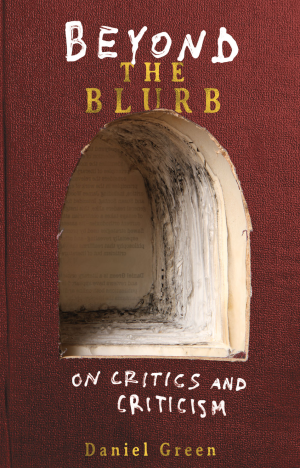

  • It would seem that a significant number of people whose opinions I otherwise respect, including not a few literary webloggers, have great admiration for the British literary critic James Wood. (Or at least they profess to admire him–one could wonder whether some of those who have extolled his critical virtues aren't trying to stave off some of the critical barbs he might at some point hurl in their direction.) I would like to say I share the high opinion of Wood so many others have expressed, since in some ways he does continue a tradition of informed, wide-ranging literary criticism not tied to the careerist norms of the academy that desperately needs to be revived. But I just can't. Ultimately his reviews and essay-reviews are detrimental not just to the cause of literary criticism but to the continued appreciation of the possibilities of literature itself.

    Last year in a review of Wood's novel The Book Against God, Wyatt Mason made some telling points against Wood as a critic, some of them similar to those I will make here, so I would recommend reading Mason's essay for an even more extensive discussion of the topic. However, I am going to use Wood's most recent review, of John Le Carre's Absolute Friends in The New Republic, to illustrate my particular problems with Wood's criticism. I should say that I am neither a fan nor a detractor of Le Carre. I have read a few of his books and found them entertaining enough. I would not be among those Wood takes after for elevating Le Carre above his merits to the status of "literary" writer. Perhaps thus I am even better able to see the limitations of Wood's approach to both criticism and literature than if he were attacking a writer I greatly esteem.

    I will also say that I do not question Wood's intelligence, his preparation to be a critic, or his motives. I think he believes his approach to literature is the correct approach. (And unlike Dale Peck, Wood's harsh judgments are usually backed up with reasons, even reasons that have something to do with the book at hand.) I simply think that this approach exemplifies what's finally wrong with the kind of literary criticism he attempts to perpetuate.

    It would indeed be easy to maintain that Wood sees literature as a kind of religion-substitute, a charge Wood has himself acknowledged and to an extent accepted. But it's not so much questions of religious belief or "philosophy" more generally that Wood wants to find addressed in works of "serious" fiction. It's that he wants to take literature seriously in the same way the devoted take their religion. Just as they often believe their religious tradition gets things right in a particular way, Wood wants to believe there's one true path to writing a serious novel, one which makes all other paths not just more full of obstacles but actual roads to perdition. Wood's attacks on writers like Don DeLillo or Thomas Pynchon can be seen as motivated by this larger belief.

    In the case of Le Carre, his first sin is to have written genre fiction. Although Wood tries not to condemn the whole enterprise outright in this review, it's clear enough he has no use for it. We can't even say that in reading Le Carre we learn anything about spying because, Wood declares, "much of Le Carre's detail was entirely invented, including the terminology, and there were old intelligence hands who complained that his picture of the service, while intended as an anti-James Bond demystification, was itself a species of romance." Not only is Le Carre a genre writer, then, but he writes. . .fiction.

    Next Wood goes after LeCarre's reputed "political complexity" (which of course Wood thinks is anything but):

    . . .In fact, instead of analyzing the political complexities of the Cold War, Le Carre's books narrate the functional complexities of the political complexities; that is, they show us, mainly, that the two espionage systems often worked in matching ways. This insight then locks the mazy plots in place, essentially closing the door on further analysis: the two-sided mirror dazzles further curiosity. And so the form of the books tends toward a self-cancelling amnesty, each side a little shabbier at the end of the story than it was at the start.

    I sure hope I am not alone in finding this passage mostly gibberish. To be fair, it has probably come out this way because Wood is trying to hide, as he does through most of the review, what he really finds objectionable about Le Carre: he doesn't like the man's politics, especially the "anti-American" turn his politics has seemed to take of late.

    We are told that Le Carre "can write very well," even in this latest book, which Wood clearly despises. However, after quoting a passage of ostensibly good writing, and even explaining why some might find it good, Wood eventually concludes that Le Carre's "prose announces, in effect: 'here is what the world looks like according to the conventions of realism.' It is a civilized style, but nonetheless a slickness unto death." Apparently even what Le Carre actually does well he doesn't do well at all. (Or, he writes well very badly.)

    Which brings us to the real nub of the issue, the failing of Le Carre's that is most debilitating, the overriding purpose novels must embody that Le Carre doesn't understand. In his essay, Wyatt Mason observes that ""How somebody felt about something' is precisely what Wood wants from a novel; reaching into character is what he expects. Consciousness is the ultimate freedom, and its honest representation in fiction is what draws us into sympathy with the created, not with its creator. This is the hallmark of the work of those authors. . .for whom Wood has the greatest regard." Of Le Carre Wood says: [His] character portraits are not themselves complex, merely complex relative to the rolled thinness of most characters in contemporary thrillers." Le Carre's characters, like those of Hemingway and Graham Greene, "are, paradoxically, alert but always blocking the ratiocinative consequences of their alertness. Such characters are not minds but just voyeurs of their own obscurities."

    Frankly this is just a very pompous way of saying that Le Carre–and by extension almost all of the writers who come up short in Wood's estimation–does not employ the technique of "psychological realism," the revelation of consciousness that seems to be for Wood the most important legacy of the modernist fiction writers. To this extent Wood is stuck in the early twentieth century, taking what was indeed at the time an innovation in the presentation of character and a step beyond the realism of earlier writers as the final word about what novels ought properly to do. Clearly it fulfills his own needs as a reader of fiction, filling in whatever void was left when he abandoned religion, but to write this out as a prescription for what novels must be like for everyone else seems hardly tenable, just as other, differing prescriptions (for "plot," for "clarity," even for "originality") shrinkwrap fiction into easily storable commodities but don't allow for the flexibility of the form.

    Wood is sometimes compared to the academic critic F.R. Leavis, and indeed Wood's prose does have some of the smug lecture hall certainty and harsh evaluative tone of Leavis at his worst. But there's very little in Wood's writing that conveys an enjoyment of literature (sometimes a failure of Leavis's as well), even of those literary artists he appears to admire. Furthermore, Wood's own criticism is very seldom enjoyable–it creates the tense atmosphere suitable to a hanging judge. (Note how seldom he reviews writers he actually does admire–and certainly very few current writers, unless they're to be sent to the gallows–preferring the already indicted malefactors.)

    Wood also shares something with the "moral critics" such as the poet-critic Yvor Winters or Lionel Trilling (or even Irving Howe.) With all of them, literature is a rather sour and sober affair, the critic its grave taskmaster. I will take Wood's word for it that Absolute Friends is spoiled by the inserted political rhetoric he describes, as fiction usually is by such propagandizing. But one can't help but feel that by the end of the review Wood has converted what should be an aesthetic flaw into a flaw of the author's own character ("this humanly implausible and ideologically enraged novel"–enraged at George W. Bush). If Le Carre is not exactly judged to be a bad man, he is judged to be a "bad writer" solely because he has ideas different than James Wood's, ideas about the world and about fiction. To this extent, Wood shows himself to be a remarkably intolerant critic, just as "ideological" in his way as Le Carre is accused of being.

    If this is the remaining legacy of the "great tradition" of British literary criticism (or American, for that matter), better that we should refuse it.

  • In the March issue of First Things, R.V. Young, an English professor at North Carolina State University, seeks to praise Shakespeare, and not to bury him. Here is the first paragraph of his essay:

    More than any other writer, Shakespeare embodies the distinctive principles of Western Civilization. Men and women of the West are drawn to Shakespeare because his plays and poems continue to express their aspirations, to articulate their concerns, and to confront the tensions and contradictions in the Western vision itself. He is admired not as an uncritical encomiast of his own culture and society, but rather as an exemplum of the spirit—both critical and conservative—that is among the West’s most enduring legacies to the world. It is, therefore, no surprise that academic literary critics, who owe their very existence to Shakespeare and other great writers, have cast doubt upon Shakespeare’s exalted position at exactly the moment in history when the societies of the West have become most anxious about their own integrity and probity.

    Now, I think Shakespeare is indeed the greatest writer in the English language (and I have read all of the plays). I also think the passage just quoted is garbage.

    When I come upon essays like this one, ostensibly defending Shakespeare from all of his many supposed detractors, I also come as close as I ever do to feeling sympathy for the academic critics who have rejected "bardolatry" and used Shakespeare as one more opportunity to "depreciate the merely literary" (Sven Birkerts) and politicize literary study to advance their own agendas. These critics assume (wrongly, in lots of cases), that this sort of Western-Civ rah-rah was really the goal of academic literary study all along and have understandably enough recoiled from it.

    But of course to uniformly boo and hiss at "the West" is no better than to always celebrate its wonders, and my sympathy is short-lived.

    What I really seem to hear when reading passages like the one above is the sound of Shakespeare himself frantic to free himself from the grave if only to seek out the likes of Professor Young and throttle him. Shakespeare of course had no interest in the "distinctive principles of Western Civilization" (wouldn't have known what they were), did not in the least express something called the "Western vision," was certainly no "encomiast of his culture and society" (far from it), and sought to exemplify nothing but the possibilities of the forms in which he wrote and whatever personal "vision" of human existence he had managed to acquire. (And fortunately he did possess a vision that has seemed to express the aspirations and concerns of many of the rest of us–the one point on which I agree with Professor Young.)

    But in Professor Young's "vision" Shakespeare's plays and poems disappear in favor of an "encomium" on behalf of Western Civilization, Shakespeare becomes a Great Figure to admire and exalt (but not to read), an opportunity for the Professor himself to posture and declaim. And Shakespeare is not the only writer to fall victim to this sort of reactionary praise ("reactionary" in the literal sense of the term, as it is a reaction to the perceived loss of prestige among the "great" Western writers). Sadly, writers from Milton and Swift to Emerson and Twain are accorded this dubious defense, their obvious enough human limitations in terms of racial attitudes or class solidarity not simply acknowledged or explained but erased. Young, for example, struggles mightily in his essay to demonstrate there's really nothing at all wrong with Shakespeare's depictions of Shylock and Othello, that in fact he really portrays Jews and "Moors" as stand-up guys. I would agree that there's great amibivalence in the portrayal of these characters, and that the plays in which they appear ought not to be merely dismissed, but there's no point in denying that some of the ambivalence is unattractive, to say the least.

    Sometimes people come to have questions about even great writers not because they despise Western Civilization but because every new generation of readers has to be convinced anew that the work of these writers actually stands up to present scrutiny. (The sort of indoctrination Professor Young seems implicitly to favor never works.) "Criticism" of the kind this First Things essay represents doesn't help to resolve such questions because it ultimately discourages serious reading in the first place. An acquiescent and unequivocal esteem will do. It might still be presumed that previous generations of academic critics all essentially engaged in this kind of empty rhetorical gesturing, but most of them did not. "Close reading" was an approach to literature that precisely encouraged readers to take literature seriously, but, at its best, it attempted to show these readers a more resourceful way to do this.

    Ordinarily, First Things has a relatively limited audience, one that is presumably already receptive to the message R.V. Young has come to bring them. But the essay was featured at Arts & Letters Daily, so it might have reached others who could be tempted to believe it. The more broadly such misguided and unhelpful messages manage to get purveyed, the more important it becomes to intercept them.

  • Too Much Writing

    The Association of Writing Programs (AWP) puts out a review/journal called The Writer's Chronicle (sadly, not available online), similar in many ways to Poets and Writers. As does Poets and Writers, Writer's Chronicle always steers pretty close to the mainstream, dispensing "advice" and "analysis" that seldom strays from the conventional and currently accepted.

    Rarely, however, has WC printed an essay as vapid and uninformed as "Translating Ideas: What Scientists Can Teach Fiction Writers About Metaphor," written by Debra Fitzgerald and featured in the new issue of the journal (March/April 2004). The essence of her argument in favor of "scientific" uses of metaphor can perhaps be gleaned from this analysis rather late in the essay. First she quotes a passage from Jonathan Lethem's Motherless Brooklyn:

    The cat walked in from the main room and stood on my outstretched thighs and began kneading them with its front paws, half-retracted claws engaging the material to make a pocka-pocka-pocka sound. . .The cat was black and white with a Hitler moustache, and when it finally noticed I had a face it squeezed its eyes at me. . .The big Nazi cat went on raking up thread-loops from my trousers, seemingly intent on single-handedly reinventing Velcro. . .its uneven cackling purr. [Ellipses inserted by Fitzgerald.]

    Fitzgerald's critique:

    There is a clearly defined object here–the cat–but there are three different images attached to it. The big Nazi cat with the Hitler moustache and cackling purr intent on reinventing Velcro conjures up simultaneous images of an ethnic cleanser, a witch, and, I don't know, an inventor. While these images are fun and evocative, they are a dead-end. They do not heighten our understanding of the idea of this cat. It's a passage full of nonfunctional, decorative metaphors, a good example of writing that is all style, no substance.

    This reading of the passage is so ham-handed that I can't entirely be sure I know what it's getting at, but the point seems to be that Lethem (it would be more accurate to say Lionel Essrog, the narrator), is not sufficiently concerned with giving us a clearly "functional" description of the cat, one that gives us an "idea" of the cat. (Why that would be necessary is not explained.) It's apparently not enough that Lethem would use the cat as an opportunity to create a word-portrait, a verbal construction, one that might go beyond the merely "functional" to help us see the "clearly defined object" in a less clearly defined, but perhaps more insightful way. Or, more importantly, that he would use this scene and Essrog's perception of the cat to help us more fully understand Essrog's own, I don't know, peculiar relationship to the world (keeping in mind his own Tourette's-induced verbal habits.)

    I once taught a course in contemporary American fiction in which during our discussion of John Updike's Rabbit Run a student bitterly complained about Updike's generous (my word) prose style. In another class I had recently heard a similar complaint about Madame Bovary. (All that description.) I was led to say to the Updike-fatigued student–perhaps more harshly than I should have–that I found it strange to be accusing a writer of engaging in "too much writing." (The rest of the class did find it amusing.)

    I have to say that I think this is what Debra Fitzgerald's argument boils down too. Too many writers doing too much damn writing. Too much style, and not enough substance. This is not the occasion for going into a lengthy disquisition about the interaction of style and substance, about the way in which style creates its own substance, etc., etc. Suffice it to say that Fitzgerald wants writers to follow scientists in providing strictly functional metaphors that help to explain and instruct, and that I think this couldn't be a more unfortunate and almost willfully obtuse understanding of what serious fiction–literature–ought to be about. Certainly there are plenty of writers who take the merely "decorative" as the index of good writing, but Lethem isn't one of them, and neither is Updike.

    (And frankly I often find the use of these "functional" metaphors by scientists and science writers to be annoying and implicitly condescending, a way of dumbing down science for the rest of us yokels.)

    What finally disturbs me the most about "Translating Ideas" is precisely that it is published by Writer's Chronicle and at least implicitly has its imprimatur. I can't be certain about the editors' intentions in publishing the essay, but I have to assume they at least in part found it compelling and worth passing along to its readers. And since a very large part of its readership consists of student and aspiring writers, that this is the advice they get from an influential "professional" organization to me borders on scandalous. If the powers that be in Creative Writing programs hope to turn out writers who follow this advice, Heaven help us. Literature has already been shown the door in departments of literary study; is writing to be expelled from Creative Writing?

  • The Poet-Critic

    T.S. Eliot once wrote that in his view "Probably, indeed, the larger part of the labor of an author in composing his work is critical labor; the labor of sifting, combining, constructing, expunging, correcting, testing: this frightful toil is as much critical as creative. I maintain even that the criticism employed by a trained and skilled writer on his own work is the most vital, the highest kind of criticism; and. . .that some creative writers are superior to others solely because their critical faculty is superior." (Eliot means not that such writers should be judged superior because they manifest this critical faculty, but that it is the possession of this faculty that has made them "superior" in the first place.)

    Eliot is himself perhaps the most distinguished example, in the twentieth century at least, of the "poet-critic," the "creative" writer who also feels the need to write literary criticism, as if the creative act of writing poetry is not quite finished unless it is accompanied by some critical analysis that goes beyond the kind he ascribes here to the writer performing such analysis on his own work. (It should be said that Eliot has been accused, with some justification, of writing criticism that ultimately works to confirm the kind of poetry he wrote, even when ostensibly writing about other poets. This does not make his criticism less valuable to us now, however.) There have been many such poet-critics, especially in British literature: Dryden, Johnson, Pope, Coleridge, later Eliot, Empson, Auden, and others. In American literature such "poet-critics" have often enough been novelists: Henry James, Ralph Ellison, Mary McCarthy, among living writers Norman Mailer, Gilbert Sorrentino, John Updike, very recently writers like Jonatham Lethem and Michael Chabon.

    Some think that "creative writers" ought to refrain from writing criticism, especially in the form of reviewing their colleagues and potential competitors. However, Eliots's statement explains why poet-critics ought to be encouraged to engage in literary criticism: they know best of all what is really required of poetry and fiction for it to be aesthetically and intellectually credible, "crafted" in all the best senses of the term. In fact, in today's literary climate, where few literary critics who both respect literature and wish to write about it in generally accessible terms are actually to be found (or have a forum in which to do it), the criticism of practicing writers might be the most important available source of sound critical judgment.

    In my lifetime, the most distinguished "poet-critic" has been, in my view, William H. Gass. Although he has published at least two works of fiction, In the Heart of the Heart of the Country and The Tunnel, that stand up to the work of any of his contemporaries, he has also produced half a dozen collections of critical essays that will surely endure as among the best criticism to appear in the second half of the twentieth century. The day his "Collected Essays" appears will be a notable one in American literary history.

    Although he is a fiction writer and not a poet, his criticism may in fact be the best example to be found of criticism as poetry. In this he exemplifies Eliot's claim that the critical and the creative are, in the best writers, inextricable. This is the beginning of the first essay in Gass's first critical book:

    So much of philosophy is fiction. Dreams, doubts, fears, ambitions, ecstasies. . .if philosophy were a stream, they would stock it like fishes. Although fiction, in the manner of its making, is pure philosophy, no novelist has created a more dashing hero than the handsome Absolute, or conceived more dramatic extractions–the soul's escape from the body, for instance, or the will's from cause. And how thin and unlaced the forms of Finnegans Wake are beside any of the Critiques, how sunlit Joyce's darkness, how few his parallels, how loose his correspondences. With what emotion do we watch the flight of the Alone to the Alone, or discover that "der Welt ist alles, was der Fall ist," or read that in a state of nature the life of man is 'solitary, poor, nasty, brutish, and short' . . .

    Novelist and philsopher are both obsessed with language, and make themselves up out of concepts. Both, in a way, create worlds. Worlds? But the worlds of the novelist, I hear you say, do not exist. Indeed. As for that–they exist more often than the philosophers'. Then, too–how seldom does it seem to matter. Who honestly cares? They are divine games. Both play at gods as others play at bowls; for there is frequently more reality in fairy tales than in these magical constructions of the mind, works equally of thought and energy and will, which rise up into sense and feeling, as to life, acts of pure abstraction, passes logical, and intuitions both securely empty and as fitted for passage as time.

    Few writers of criticism are able to combine such a compelling and frankly "superior" prose with correspondingly apposite critical insights as does William Gass. To this extent, I would not hold him up as a model. Gass's example, as well as Eliot's, does illustrate, however, that the "poet" and the "critic" can coexist comfortably. More importantly, poets and novelists might learn from them to less reluctantly admit that the creative work to some extent requires the "frightful toil" of the critical. At the same time, critics, perhaps especially critics who are not themselves "creative" writers, ought more often to acknowledge that this toil is only compounded in the labor performed by poets and novelists. It is not a simple matter of unsightly "expression" being confronted with the "handsome Absolute" of critical judgment.

  • Realism

    In a previous post I referred to a discussion in the weblog s1ngularities:criticism in which John Updike was quoted as saying that in the U.S. "realism is kind of our thing." The quote was in reference to Donald Barthleme and his supposed decline in influence, but I've looked up the Salon interview in question (it's actually quite an old one, going back to the pubication of In the Beauty of the Lilies) and Updike had actually mentioned both Barthelme and John Barth, remarking, in full, that "There are fads in critical fashion, but a writer at his peril strays too far from realism. Especially in this country, where realism is kind of our thing. Writing that gives you the real texture of how things look and how people acted. At least there's something there beyond your self and your own wits to cling to, a certain selflessness amid the terrible egoism of a writer."

    Updike doesn't necessarily speak contemptuously of either Barthleme or Barth, and if they were "out of fashion" in 1996, they are indeed even more so now. However, Updike's assertion that "realism is kind of our thing" is simply wrong. It can't stand up to an analysis of American literary history in any way.

    I'm not sure that Updike's own fiction validates a statement like this one, in fact. Certainly his work represents an effort to give "the real texture of how things look and how people acted," but a number of his books defy the label "realism" in any meaningful sense of the term: The Centaur, The Coup, The Witches of Eastwick, Brazil, S, most recently Toward the End of Time. Furthermore, Updike's sinuous prose style is probably not what most people have in mind when they think of "realistic" storytelling.

    Much of the most important American fiction fits more comfortably into the the category of "romance" than realism. (The term goes back to the medieval narrative form, and doesn't have any connection to the modern "romance novel.") Hawthorne famously set out the terms in which the romance is to be understood in his preface to The House of the Seven Gables: "When a writer calls his work a Romance. . .he wishes to claim a certain latitude, both as to its fashion and material"; this "latitude" allows him to present the "truth" of human experience "under circumstances, to a great extent, of the writer's own choosing or creation" and to "manage his atmospherical medulm as to bring out or mellow the lights and deepen and enrich the shadows of the picture."

    Going back to the beginnings of American fiction, "romance" would thus encompass the work of Charles Brockden Brown (often identified as the first important American novelist), Washington Irving, James Fenimore Cooper, Hawthorne, Melville, much of Twain, the later Henry James, Faulkner, Ellison, Flannery O'Connor, Malamud, much of the later Roth, and, in my opinion, almost all of the writers called "postmodern." Of the "great" American writers, only Crane, the earlier James, Edith Wharton, Dreiser, Steinbeck and Hemingway could plausibly be called "realists." (And there are those who think the latter would more aptly be called a "symbolist" rather than a realist.) Currently the followers of Raymond Carver or Richard Yates might fit the description.

    Perhaps it's just that the term "realism" gets tossed around much too lightly, used to signal other assumptions about what fiction ought to do: tell dramatic stories, create sympathetic characters, depict current social conditions, reflect "life" as most readers would recognize it. If so, I can't believe Updike actually thinks that this kind of "realism" is either fiction's "proper" mode or that most readers actually do prefer fiction that really, truly, tells the "truth" about human existence or the common lot of most people in our beloved U.S. of A. In my somewhat jaded opinion, most readers still want "escapist" literature–to the extent they want literature at all–that nevertheless doesn't stray too far from ordinary experience. American "literary" writers have really never provided them with this, so the test of how many people are reading a given writer at a certain time is wholly irrelevant.

    Having said all this, I like much realist fiction perfectly well. Flaubert is a great writer, as is Chekhov, as is James, as is, in a much different way, Thomas Hardy. If the complaint is that current writers don't write like these folks, well, few writers could. If it's that writers like Bartheleme or Barth don't write conventional narratives with "real" people and identifiable "themes," then it's really a complaint that serious fiction doesn't remain static and hidebound. This is not Updike's complaint, but it's one I hear often enough.

    For a much fuller treatment of the romance tradition I've sketched out here, see Richard Chase's The American Novel and Its Tradition, one of the books I listed in a previous post ("On Reserve") as among the ten critical works with which all serious readers should be familiar. That such books have fallen into obscurity is itself perhaps one of the reasons many people misunderstand what the history of American literature actually shows us–and thus what many contemporary writers are actually up to.

  • Freedom to Roam

    Over the weekend I watched Woody Allen's Anything Else on DVD. (I believe I am correct to say it is his most recently released film.) To sum up the experience quickly, it was very painful.

    As the author of a "scholarly" essay on Allen, as well as other such essays on film comedy more generally, I feel like I do have some modest authority to speak on this subject (as well as to occasionally change the focus of this blog from literature to film), and to judge that Anything Else is a complete dud, perhaps the most disheartening failure of Allen's career. (Interiors was bad, but for other and to some extent understandable reasons.) This may be the first time Allen sets out to be funny in the manner of his earlier films–at least the "romantic" comedies Annie Hall and Manhattan–and just isn't.

    The jokes are generally tired and derivative (with a few exceptions, as when the protagonist's girlfriend tells him (in essence) she can no longer stand to have sex with him, but that of course it has nothing to do with him), but that is really the consequence of the film's lack of authenticity more generally. The film's main characters are young–even younger than Allen and his own co-stars in their "younger" days in the 70s–and Allen seems to have no clue what to do with them other than rehearse the old routines in what is only a superficially similar mileu.

    How much more interesting it would be to see Allen attempt to portray–comically, of course–characters of his own age (60s) dealing with the kinds of problems they still confront, rather than, as he does in this film, trying to keep up with the kids. There aren't that many precedents for either slapstick or romantic comedies about older folks, but one would think that someone as unconcerned about Hollywood and its conventions and as bold a filmmaker as he once was, at least, would be willing to tackle such a subject. Allen's comedic talents and joke-making facility in this context might produce something "edgy" indeed.

    Of course, that Allen has chosen in Anything Else to make a conventional romantic comedy focusing on younger people–unmarried people–may just be an obvious sign of the kind of audience to which filmmakers must appeal. It's certainly possible that a film of the sort I've described would fail miserably at the box office (although it probably couldn't fail more miserably than Anything Else apparently did), since the audience for even the "mature" subjects that do get screen treatment now is assuredly small and perhaps getting smaller. However, if a filmmaker as free to do as he pleases as Allen has generally been can't break out of the constraints of the "youth market," who can?

    In this way writers of fiction still have an advantage over filmmakers. In some ways their biggest obstacle lies in the opposite direction: actually cultivating a youthful audience for fiction. Still, literary fiction generally depicts the full range of available experience, from childhood to old age, if anything is able to explore the less familiar if not deliberately ignored circumstances of the various kinds of "marginal" people movies don't always like to examine. (And if they do, frequently they're movies based on novels.) Perhaps novelists and short story writers ought not to aspire to the kind of popularity movies enjoy, if it would mean giving up this freedom to roam through the whole open territory of human experience.

  • On Charles Dickens

    Steve Mitchelmore at In Writing bravely confesses to all of the "great" writers he hasn't read. The first one he mentions is Charles Dickens.

    I suspect Steve isn't alone, if not in having read no Dickens then certainly in having read very little of his work. This is no doubt in large part, at least in the U.S., to the horrible way Dickens has been "taught" in American high schools. (The extent to which literature is actually taught at all in high schools, or even whether it ought to be, are entirely separate questions to be left for another day.) By and large, the Dickens novel most frequently thrust into the hands of high school students is A Tale of Two Cities, inarguably his least representative work, and arguably his weakest. It is used in this way, in fact, because it generally contains fewer of those characteristics that make Dickens Dickens: his picaresque abandon, his outsized characters, his exuberant and fluent style, above all his humor. In my opinion, no writer in any language is funnier than Charles Dickens.

    Here's a passage that illustrates many of the features I've just mentioned. It's from Dombey and Son and introduces "Miss Tox":

    The lady thus specially presented was a long lean figure, wearing such a faded air that she seemed not to have been made in what linen-drapers call "fast colours" originally, and to have, by little and little, washed out. But for this she might have been described as the very pink of general propitiation and politeness. From a long habit of listening admirably to everything that was said in her presence, and looking at the speakers as if she were mentally engaged in taking off impressions of their images upon her soul, never to part with the same but with life, her head had quite settled on one side. Her hands had contracted a spasmodic habit of raising themselves of their own accord as an involuntary admiration. Her eyes were libale to a similar affection. She had the softest voice that ever was heard; and her nose, stupendously aquiline, had a little knob in the very centre or keystone of the bridge, whence it tended downwards towards her face, as in an invincible determination never to turn up at anything.

    Miss Tox is a relatively minor character in the novel, but she's as absolutely vivid a character as many a protagonist in novels by lesser writers. And Dicken's novels are full of such characters, all of them at once both distinctive and colorful as well as fully recognizable as "types" that must have been instantly recognizable to readers in Victorian England–creating this sort of characterization itself being one of Dickens's great gifts, perhaps unrivaled by any other novelist. The humor of this passage is also typically "Dickensian": observant, tolerant of eccentricities, and devastating all at the same time. His comedy can sometimes be "gentle," but it is frequently also quite caustic, even dark. Here is the first paragraph of Dombey and Son: "Dombey sat in the corner of the darkened room in the great arm-chair by the bedside, and Son lay tucked up warm in a little basket bedstead, carefully disposed on a low settee immediately in front of the fire and close to it, as if his constitution were analogous to that of a muffin, and it was essential to toast him brown while he was very new." This seems a homey enough scene, except that, as it turns out, Dombey's ultimate actions toward Son are indeed such (if unintentional) to "toast him brown." (And the fireside vignette is taking place at the same time Dombey's wife is dying after giving birth to Son.)

    The ultimate effect of both the comedy and the characters in Dickens's novels is to convey a world that is utterly real and also completely removed from the "real world": a Dickens-world that no one could mistake for another writer's creation, or for that matter the usually banal world we all inhabit. This does not mean Dickens is for "escapist" readers. Few novelists have ever been as engaged with the social and cultural and economic conditions of his/her time as Dickens. Dombey and Son depicts the horrendous consequences of the mercantile mindset in a way that should make us ashamed to have sentimentalized A Christmas Carol as much as we have done. There's no more scorching indictment of "the law" as Bleak House. (Perhaps Gaddis's A Frolic of His Own.) Hard Times portrays the ill effects of utilitarianism with compact (for Dickens) precision. But his novels are first and foremost fully realized aesthetic creations in which the comedy and the satire and the characterization and the social commentary are all inextricably joined.

    Which is not to say there are no flaws in Dickens's fiction. If we've sentimentalized Ebenezer Scrooge and Tiny Tim, there's truth in the charge they're latently–maybe more than latently–sentimental figures to begin with. Florence Dombey is the Tiny Tim of Dombey and Son, and here's a description of her: "Florence was little more than a child in years–not yet fourteen–and the loneliness and gloom of such an hour in the great house where Death had lately made its own tremendous devastation might have set an older fancy brooding on great terrors. But her innocent imagination was too full of one theme to admit them. Nothing wandered in her thoughts but love–a wandering love, indeed, and cast away–but turning always to her father." This at a point in the novel when Florence's father could not be less deserving of her love. There's no getting around the fact that Dickens's novels are to some degree enfeebled by the too-frequent appearance of characters and scenes like this. Luckily, his best books are relatively free of them, and such characters as Florence Dombey do have a role to play in the overall moral dynamics at work in his fiction. (One of the consequences of assigning them this role, however, is that with these characters we are deprived of the great comic flourishes of which Dickens is otherwise such a master.) Furthermore, the great strengths of his work, the strengths I have tried here to indicate, however sketchily, vastly compensate for the emotional flaccidity the sentimental moments occasionally introduce.

    In short, if there is an impression that Charles Dickens is old-fashioned, stodgy, associated with a now superseded approach to writing fiction, that assumption is totally wrong. Readers and writers can still learn much about what fiction is capable of achieving by reading him.

    Nor should his immense popularity, both during his lifetime and subsequently, be held against him. It is merely one of the few examples of the public actually being right.

    For the uninitiated–perhaps even Steve?–there are several ways of beginning with Dickens. Of the earlier, more loosely structured books, Oliver Twist and Nicholas Nickleby would be good choices. If you'd prefer to start with something briefer and more concentrated, Hard Times is the choice. If you want to go straight to the masterworks, these would be Bleak House and Great Expectations. (Dombey and Son falls just short of these books, as does Our Mutual Friend.) Although David Copperfield is perhaps Dickens's most popular book, it is also a great novel as well.

    For a much longer appreciation of Dickens, see Edmund Wilson's "Dickens: The Two Scrooges" in The Wound and the Bow. If I can't persuade you to read Dickens, perhaps Wilson can.

  • Ladies Only?

    When is "chick lit" actually chick lit? That is, when is it more, or less, than "a lucrative niche in an otherwise struggling fiction industry"? Is it a legitimate "genre" of contemporary literature? Is it an inherently derogatory term? If a book concerns a single and/or educated and/or young-ish woman "worrying about" her status, her love life, her family, does it automatically qualify as belonging to the genre? Can the "lit" part be completely spelled out into "literature"?

    These questions occur to me as I finish reading When the Messenger is Hot, a debut collection of stories by Elizabeth Crane. Many of the reviews of the book referenced "chick lit" (at least one referring specifically to Bridget Jones, presumably the Ur-text of chick lit), and the stories, most of them revolving around the kind of urban woman mentioned above, certainly seem directed to readers who would find fiction about unmarried heterosexual women and their travails immediately appealing.

    But ultimately the stories do also seem–or at least their cumulative effect seems–more substantive than the term "chick lit" appears designed to allow for. At the same time, their almost obsessive concern with dating and sex, lifestyle and love, makes one hesitate to think of them as "literary" in the fully amplified sense of that word.

    Most of the stories are tinged with a melancholy and frustration that certainly elevates them above the Candace Bushnell-level of "women's writing." The best story in the book, "Privacy and Coffee," about a woman who in essence avoids committing suicide by "falling up" to a secluded part of a friend's apartment house rather than "jumping down" from it, is tonally right-on in capturing the protagonist's subdued despair. The second best story, "Something Shiny," is a mordantly funny tale of, literally, a loss of identity.

    Formally and stylistically the book displays some imagination and skill as well. Crane is not afraid to break out of the mold of the well-made story, experimenting in many of the stories with structure and character-creation, venturing sometimes, with varying degrees of success, into fantasia and reverie. Crane's style, generally consistent across all the stories, is also unconventional in a pleasingly unwieldy kind of way. (In a profile published in New City Chicago, Crane intimates she wanted to emulate David Foster Wallace, but her style reminds me somewhat of the decidedly non-chick writer Stephen Dixon.)

    And yet, my enduring impression is that When the Messenger is Hot to some degree expends the writer's talents and insights on overly flimsy material. Even the recurring motifs of death and grief (in most cases for the protagonist's mother) ultimately lead less to reflection on these unavoidable occurences than to assertions of the characters' sorrow in dealing with them–as if they're just one more obstacle in the way of these characters finding "fulfillment" in a rather hackneyed and familiar way. It would finally be unfair to label Elizabeth Crane a writer of "chick lit," but fans of the genre would still probably find her book more than faintly recognizable.

  • The Idiocy of Synopsis

    The New Critics sometimes appealed to what they called the "heresy of paraphrase." As defined by Hugh Holman in A Handbook to Literature, this meant that " a work of art means what it means in the terms in which it delivers that meaning, so that paraphrase, summary, abridgement, expansion, or translation is bound to miss the point, usually by understating the complexity and misconstruing the uniqueness of the original statement." Pretty clearly, the word "synopsis" could be added to this list.

    As usual, the New Critics needlessy phrased this idea in religious language, but the underlying principle is sound enough. And it was this New Critical dictum I immediately recalled when reading Robert McCrum's "The Curse of the Synopsis" in Sundays Guardian/Observer.

    As I compose this post, both the Literary Saloon and Confessions of an Idiosyncratic Mind have already commented on this article, but while in both cases their comments are completely well-taken, I don't think they go nearly far enough in capturing the sheer idiocy of judging the quality of a given book–at least when it comes to fiction–on a "synopsis." Perhaps this practice works well enough for some works of non-fiction–those in which information and "content" clearly overshadow all other considerations–but only the most reductive, simplistic approach to fiction or creative nonfiction could settle for synopsis.

    Put simply, what does a novel have to do with synopsis, or synopsis with a novel? A synopsis is usually a plot synopsis, and such an account of a work of fiction doesn't come close to describing what the reader will actually experience in reading the work, and with modern/contemporary fiction it's a total disaster. Even most forms of neorealism don't put much emphasis on plot–writers having sensibly concluded there's no point in competing with movies for the slam-bang scenario–and what would be the point of laboriously describing in a synopsis the details of character and setting that the reader simply has to encounter in the finished work?

    Think of the great novels that would necessarily seem silly in synopisis: Catch-22? Gravitys Rainbow? JR? Even Rabbit, Run or The Assistant? All of these books have to be experienced in their unfolding on the page for their qualities of language, form, tone, the intangible elements creating a good novel's distinctive voice. If a novel's essential attributes can be presented in a synopsis, why not just save time and go with the synopsis?

    Perhaps–perhaps–some genre fiction in which plot is clearly king could be adequately previewed in a synopsis. But even here, can we be certain that a really good genre novel is going to get published because of what is known about it through a synopsis? Do all the movies made recently from Philip K. Dick's novels (a film version being a kind of synopsis) really capture what Dick's fans love about his books?

    Most likely publishing through synopsis is just a way of making the job easier for editors and publishers, allowing them to perpetuate the blockbuster syndrome. In my view, most editors and publishers at the "major" houses don't know what they're doing anyway–certainly they know little about literature–and the "curse of the synopsis" is actually a curse on literature itself.